

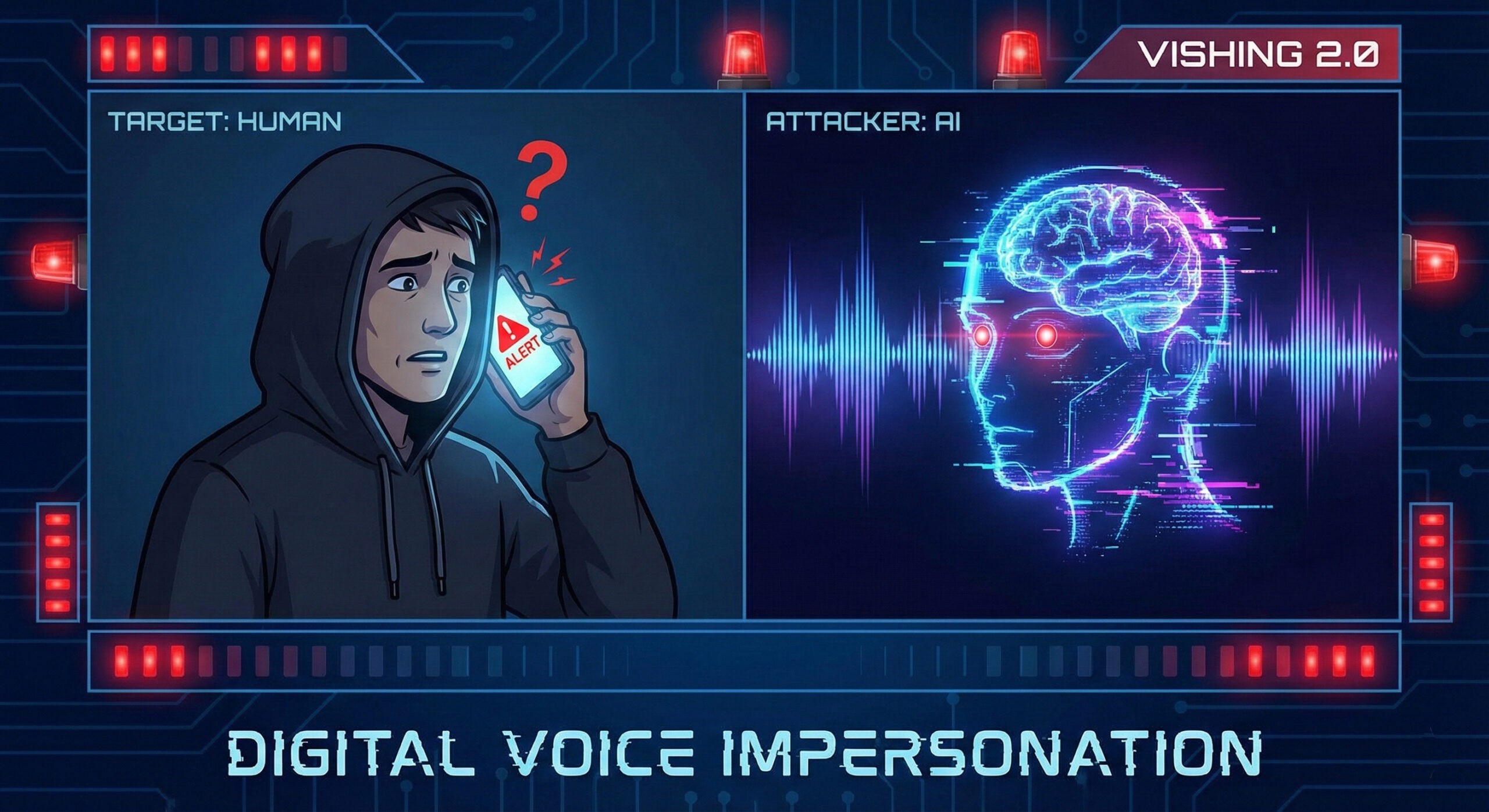
Vishing 2.0: When the phone rings and you hear your mother's voice, but it's not her
Have you ever received a call from an unknown number, but heard a familiar voice on the other end? It could be your boss, your partner, or even your child, who seems scared and urgently asks for money. Your instinct is to help immediately. But stop for a second.
In 2026, your ears can deceive you. Welcome to the era of Vishing 2.0, a modern scam in which hackers use Artificial Intelligence to steal not only data, but also the voice identity of your loved ones. At Altanet Craiova we know how scary this scenario sounds, so we offer you the complete guide to distinguish reality from fake.
What is Vishing 2.0 and how does it work?
The term comes from "Voice Phishing." While in the past scammers would call and try to convince you with words ("Hello, we're from the bank..."), now they have a new weapon: Deepfake Audio.
Hackers only need a few seconds of a person's voice recording (taken from TikTok, Instagram Stories, or YouTube) to train an AI program. Once trained, the program can "read" any text in that person's voice, perfectly imitating the tone, accent, and even breathing pauses.
The nightmare scenario: "The accident"
The most common method used now is rapid emotional blackmail. Here's how such an attack works:
- The Call: The phone rings. You answer and hear the voice of your daughter or son crying.
- Story: "Dad/Mom, I had an accident, I hit someone while crossing the street. The police are here, I need 5000 lei to settle with the victim, otherwise they will arrest me."
- Pressure: The voice is agitated, the background is noisy (artificially added sirens), and you panic and send the money immediately.
How do you know it's a fake?
Although the technology is advanced, it is not perfect. There are a few signs that can give away the robot:
- Unnatural pauses: Sometimes, the AI-generated voice makes strange pauses between words or has a robotic intonation at the end of the sentence.
- Lack of real emotions: Although it can imitate crying, the robot cannot coherently answer complex and unexpected questions. It usually repeats the same phrase ("Send the money now!").
- Sound quality: The sound may seem "cut off" or digitally distorted, as if speaking through a tube.
Safeword: Best protection in 2026
You don't need antivirus software to protect yourself from Vishing, you need a family agreement. Here's what you need to do today:
- Establish a “Secret Word”: Choose a word or phrase with your family that only you know (for example: “blue strawberry”). If someone calls you in an emergency, ask for the word. A hacker won’t know it, no matter how well they clone the voice.
- Hang up and call back: If you get a suspicious call from your "boss" asking you to transfer money to the company, hang up. Call him back on the number you have in your phone book. Most of the time, you'll find out that he didn't even call you.
- Be skeptical of unknown numbers: Even if the voice is familiar, if the number is hidden or foreign, be cautious.
To better understand the phenomenon and its global scale, you can read the official warnings about voice cloning scams (source: FTC).
Conclusion
Vishing 2.0 attacks what we value most: trust in those closest to us. But once you know this technology exists, it can't hurt you as easily. Stay calm, verify information, and don't send money under pressure.
Want to educate your office team about these new threats? We offer consulting and IT services for companies that want to stay protected. Visit our contact page for more details.
This material is part of Altanet's educational series on digital security. Want to know what other risks you are exposed to this year? See Complete list of cyber threats in 2026.

Leave a reply