

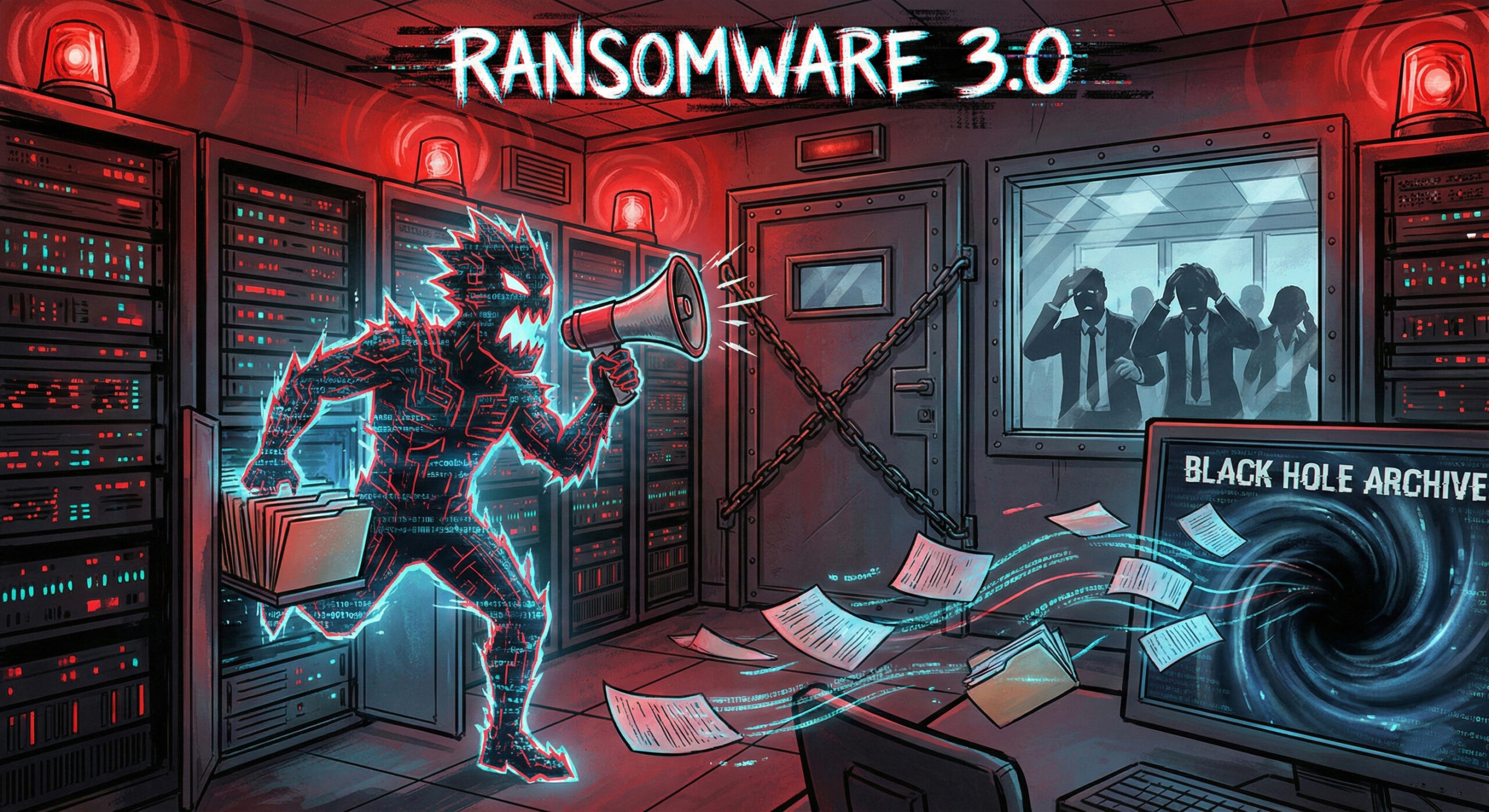
Ransomware 3.0: The nightmare where backup no longer saves you from blackmail
For any IT manager or business owner, the word “Ransomware” brings shivers down their spine. We all know the classic scenario: you arrive at the office, all your files are locked, and a message appears on the screen demanding money for the decryption key. The old solution was simple: “We won’t pay, we’ll restore your data from backup.”
But in 2026, hackers changed their strategy. Ransomware 3.0 (or "Triple Extortion") attacks appeared. At Altanet Craiova we warn companies that the mere existence of a backup is no longer enough to sleep peacefully.
What is Ransomware 3.0 and why is it so aggressive?
If in the past hackers only wanted to block your activity, now their goal is to destroy your reputation if you don't pay. The attack unfolds in three brutal stages:
- 1. Encryption (Blocking): As before, it encrypts your servers and computers, stopping production or sales.
- 2. Exfiltration (Theft): Before blocking the data, hackers copy it to their servers. If you refuse to pay for the decryption because you have a backup, they threaten to publish all your confidential data (contracts, salaries, customer databases) on the internet.
- 3. Partner Harassment (DDoS & Spam): This is the absolute novelty. If you still don't pay, hackers start calling your clients or business partners, telling them that their data was stolen due to your negligence. It's a huge psychological pressure.
Why is backup no longer the "silver bullet"?
Having a working backup is essential to restarting your business. But backups can't erase data that hackers have already stolen. Blackmail is no longer about "data access," but about "data confidentiality."
A law firm, medical clinic, or online store can go bankrupt not because they lost data, but because patient or customer data became public, attracting huge GDPR fines and lawsuits.
How do we protect ourselves from modern extortion?
Defense must move from "reaction" (restoration) to "prevention" (early detection):
- Traffic Monitoring (Data Exfiltration): You need to have systems that alert you if someone is trying to download large amounts of data from your server at 3 a.m. If you catch them copying, you can stop the attack before it gets encrypted.
- Network segmentation: Don't let all departments communicate freely with each other. If an HR computer is infected, the virus shouldn't reach the accounting server.
- Incident response plan: You need to know exactly who to call and what to do in the first few minutes after an attack. Panic leads to costly mistakes.
To better understand the mechanism of these complex attacks and the tactics of "Double Extortion", you can read the technical definition in Cyberpedia about Multi-Level Extortion.
Conclusion
Ransomware 3.0 turns a technical problem into an image crisis. Don't wait to see the ransom message on your screen. Proactive security is the only investment that will save you from paying the ransom.
Are you worried that your network is vulnerable or do you want to implement traffic monitoring solutions? Our team can perform a complete audit and offers advanced security IT services. Visit our contact page and protect your business and reputation.
This material is part of Altanet's educational series on digital security. Want to know what other risks you are exposed to this year? See Complete list of cyber threats in 2026.

Leave a reply