

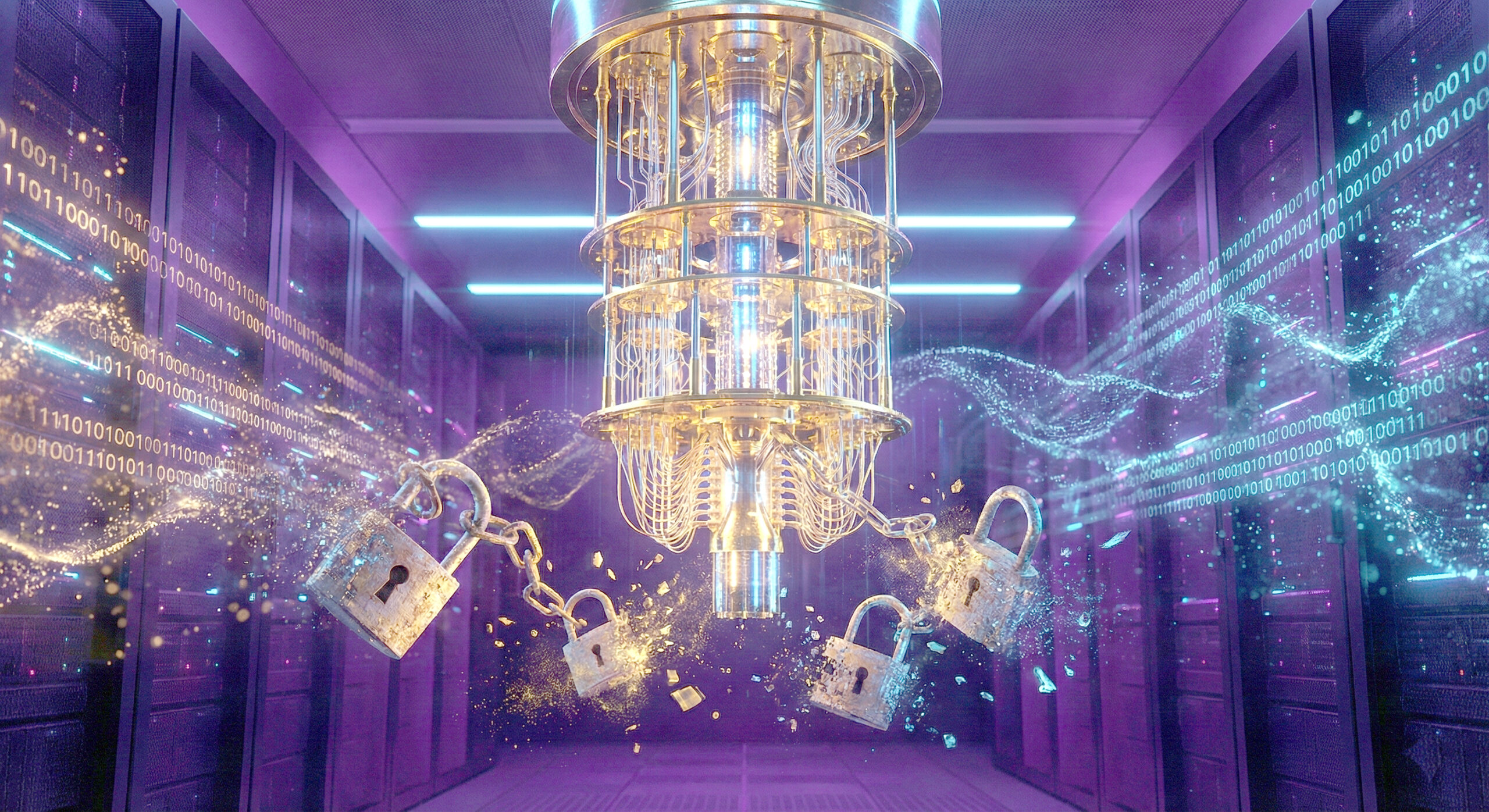
The Post-Quantum Threat: Why Hackers Steal Encrypted Data They Can't Read Yet
We conclude our list of dangers for 2026 with a look into the future. You may have heard of quantum computers – those supercomputers that will revolutionize science. But did you know that they will have the power to instantly crack almost any password used today?
Although a stable quantum computer is still a few years away, hackers have already begun the attack. Their strategy is called Harvest Now, Decrypt Later. At Altanet Craiova we want to be one step ahead and explain why your encrypted data today could be exposed tomorrow.
What does "Harvest Now, Decrypt Later" mean?
Today, when you send a confidential email or make a bank transaction, the data is encrypted. A hacker intercepting the traffic sees only a string of meaningless characters. With current technology, it would take 1,000 years to break that encryption.
But hackers think long term:
- Step 1 (Today): Hackers steal encrypted databases from companies or governments and store them on cheap servers. They can't read them, but they guard them with sacredness.
- Step 2 (In the Future): When quantum computers become affordable (estimated 2029-2030), they will use that huge computing power to instantly break old encryption.
- Result: The secrets stolen in 2026 will become visible.
Who should worry?
If your data expires quickly (for example, a price quote valid for 3 days), you have nothing to fear. But if you manage information that needs to remain secret for 10-20 years, you have a problem:
- Medical records: A person's medical history is sensitive throughout their life.
- Bank details and CNPs: A person's identity does not change.
- Trade secrets: A product's recipe or building plans remain valuable for decades.
How do we prepare for the quantum era?
The technological world is not standing still. Work is already underway on Post-Quantum Cryptography (PQC) – new mathematical algorithms that cannot be broken even by quantum computers.
- Don't use old encryption: Outdated algorithms (like MD5 or SHA1) are already vulnerable. Make sure your systems use modern standards (AES-256).
- Crypto-Agility: Build your applications so that you can easily change the encryption method when new standards are approved, without rewriting all the software.
To better understand the race against time behind this technology, you can read the explanations from IBM about Quantum Cryptography.
Conclusion
Cybersecurity is not a destination, but a continuous journey. From the mundane scams (Vishing) to the quantum threats of the future, the only constant is change.
The Altanet Craiova team is here to help you navigate these challenges. Whether you need laptop security or an audit for your entire company, visit our contact page and let's build a secure digital future together.
This material is part of Altanet's educational series on digital security. Want to know what other risks you are exposed to this year? See Complete list of cyber threats in 2026.

Leave a reply