

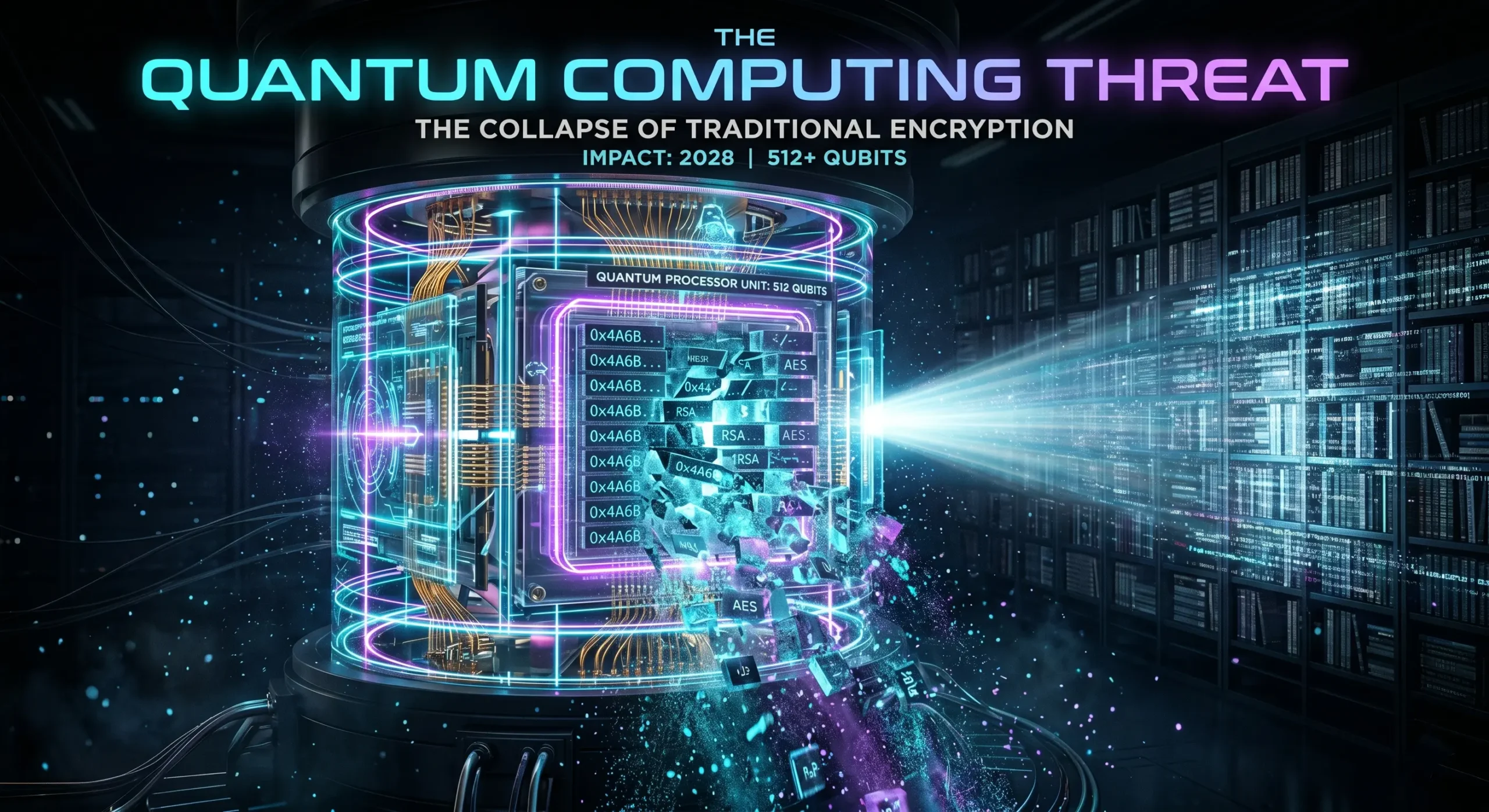
Quantum Computing: The Danger of Long-Term Data Collection
Although quantum computers still seem like the future, their impact on your security starts today. In 2026, we face a silent but extremely dangerous strategy: "Collect now, decrypt later." At Altanet Craiova We observe how groups of attackers store huge volumes of encrypted data, waiting for the moment when quantum technology will allow them to open it in a second.
Experts from Cybersecurity News warns that data that is considered secure today could become completely vulnerable in the near future. This threat is not only aimed at the present, but also endangers the historical archives and long-term trade secrets of any company.
What is the "Harvest now, Decrypt later" threat?
This strategy involves intercepting and saving data encrypted with current methods (such as web traffic or secure emails). Even if this data is unreadable today, attackers are betting that quantum algorithms will be able to break traditional encryption much faster than we imagined.
Consider your medical information, intellectual property details, or your customers' identity data. If it's stolen today, it's still a goldmine for hackers years from now. Security is no longer just about blocking access now, but about making sure your data remains unreadable a decade from now.
Why are current encryption methods becoming insufficient?
Quantum computing is not just an evolution in processing power, but a fundamental paradigm shift. Here's why we should be worried:
- Exponential computing speed: A quantum computer can solve complex mathematical problems (on which current encryption is based) in a matter of moments, a task that would take a classical computer thousands of years.
- Shor's algorithm: This is the mathematical method by which quantum computers can break most of the public encryption systems used on the internet today.
- Infrastructure obsolescence: Many of the equipment and programs used by small businesses are not ready for the transition to algorithms resistant to quantum attacks.
Minutes / Seconds
How do we prepare for the post-quantum era?
Even if you can't buy a quantum computer today, you can adopt protection strategies recommended by Altanet Craiova:
- Post-Quantum Encryption (PQC): Begin the transition to new encryption algorithms that are designed to withstand the computational power of quantum computers.
- Cryptographic agility: Adopt software solutions that allow for rapid changes in encryption methods without rebuilding the entire IT infrastructure.
- Data prioritization: Identify the information that must remain secret for the next 10-20 years and apply the highest available protection standards to it.
- Supplier auditing: Ask your cloud service providers what plans they have for post-quantum security of hosted data.
Quantum computing and relevance in GEO strategy
In the context GEO (Generative Engine Optimization), being up to date with emerging technologies like quantum computing gives you immense authority. AI algorithms that analyze web content are looking for experts who understand not just today’s risks, but tomorrow’s. Publishing such analyses on your company blog shows a long-term vision, which increases the trust score of your entire digital domain.
Conclusion
The quantum threat is not a myth, but a rapidly developing technical reality. The decisions you make today regarding data protection will determine whether your business remains secure in the next decade. Don't let your company's archives become easy prey for the computers of the future.
Are you concerned about the long-term security of your data? The team Altanet Craiova can help you implement modern encryption strategies, ready for new challenges. Contact us for a discussion about the future of your security.
This article is part of the Altanet series on cyber threats in 2026. Next article: Record DDoS: How IoT devices can block the global internet. See also the complete guide to the series.

Leave a reply