

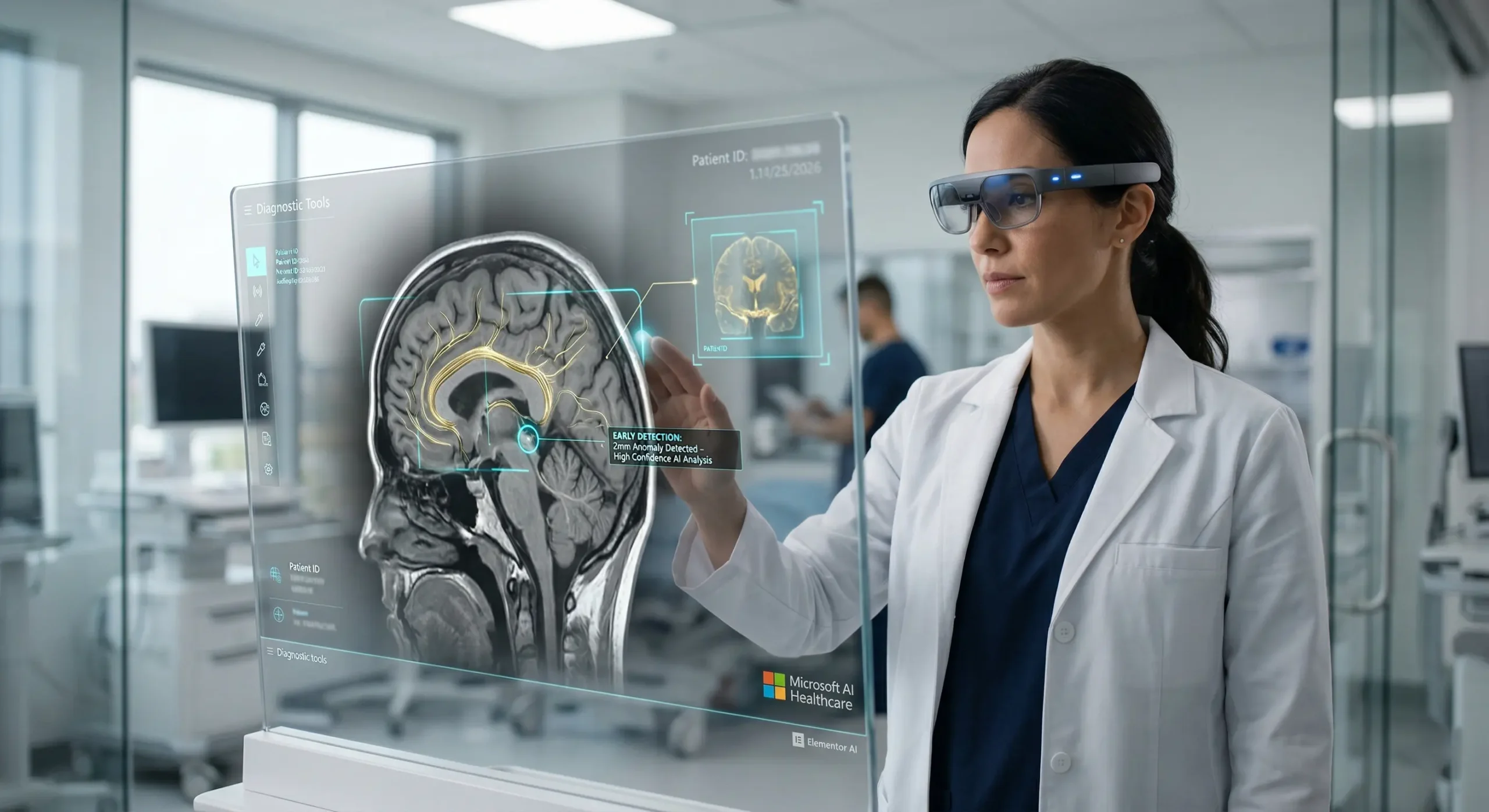
AI in Health: How an algorithm detects disease earlier than the doctor
Medicine has made huge strides in the last century, but one thing has remained constant: diagnosis depends largely on the experience and time available to the doctor. In 2026, artificial intelligence began to change this equation. Not to replace doctors, but to give them a more accurate and faster tool. At Altanet Craiova We believe this is one of the most valuable applications of AI – because we are talking, literally, about human health.
From experiment to millions of patients
Until 2024, medical AI was mostly present in research and controlled clinical trials. In 2026, it took the step towards real products, used daily by hospitals and clinics around the world. Microsoft AI Healthcare is one of the most visible examples: a system that helps doctors triage symptoms, plan treatments, and make clinical decisions more quickly and accurately.
The numbers confirm this transition:
- 97% accuracy in early detection of dementia – compared to 85% in the case of standard clinical assessment
- 3 times faster interpretation of cardiac imaging (radiographs, MRI, CT)
- 49% of healthcare organizations report tangible benefits from remote patient monitoring through AI
How does it work in practice?
The chart below shows the main medical fields in which AI is already used and the level of implementation:
Mature implementation
Growing / pilot
An example that goes beyond imagination: the gut and the brain
companies Fujitsu and Kirin Holdings together developed an AI model of pharmacology – the science that studies the effects of substances on the human body. The model identified links between gut health and brain function, paving the way for functional foods that can improve memory and mood. A result that would have taken years of classical research was achieved in a matter of months.
But the AI is not a doctor
It is important to understand the limits. Medical AI in 2026 is a support tool, not a substitute for the doctor. It processes huge amounts of data and identifies patterns that the human eye can miss – but the final decision always belongs to the doctor.
There are also real barriers to faster implementation: strict medical regulations, patient data confidentiality, and the natural resistance of a conservative system to rapid change. Experts are unanimous: the technology is ready, but health systems need time to adapt.
What's next?
By 2027, estimates show that AI will be integrated into the standard clinical workflow of most large hospitals in the world. In Romania, the first serious implementations are already underway in medical imaging and chronic patient monitoring.
If you work in the medical or pharmaceutical field and want to understand what AI solutions are already available and how you can integrate them into your activity, the team Altanet Craiova can help you. Visit our website contact and let's discuss.
This article is part of Altanet's series on AI trends in 2026. Next article: AI in science: The lab assistant who doesn't sleep and doesn't make mistakes. See also the complete guide to the series.

Leave a reply