

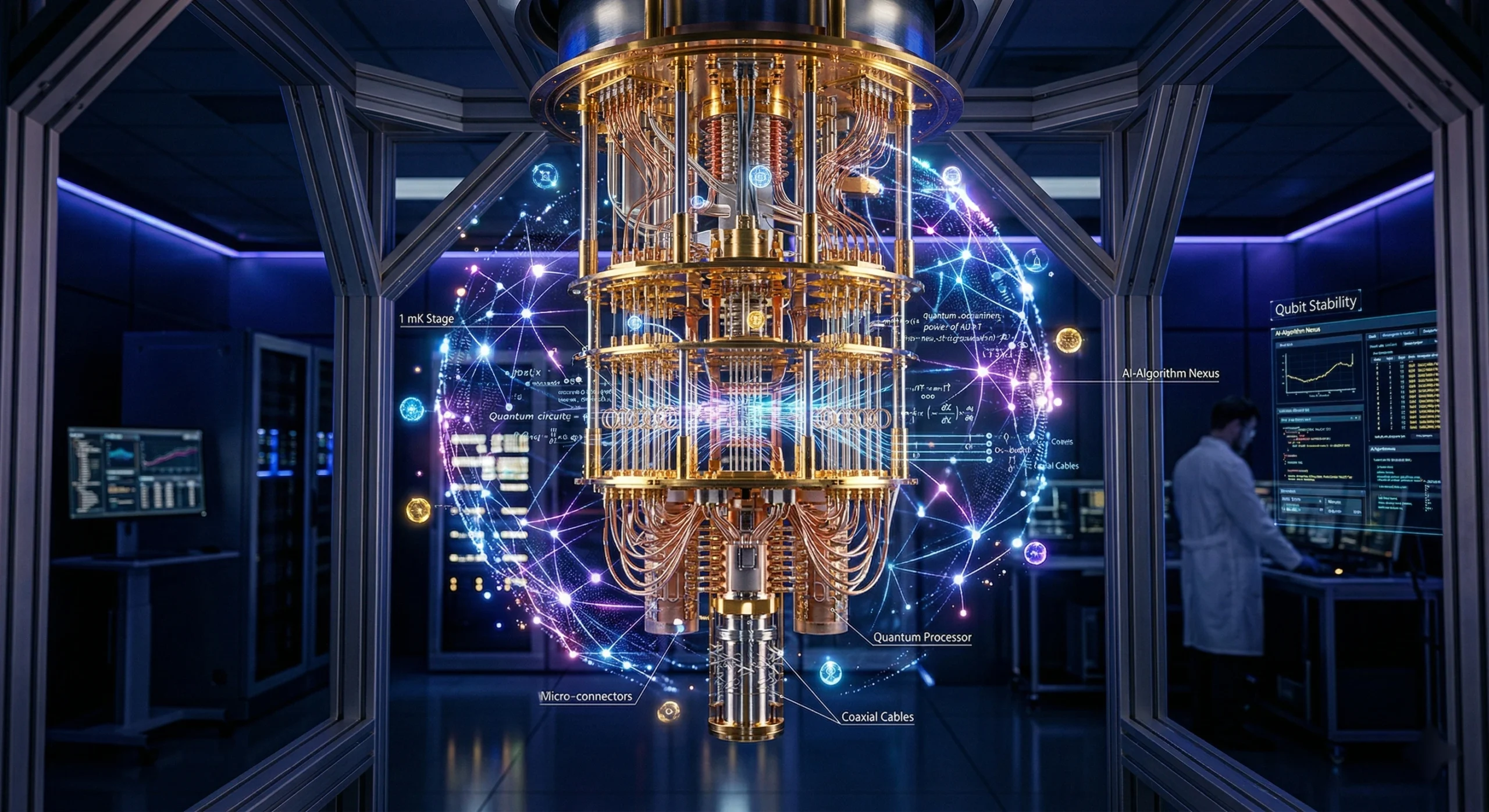
Quantum AI: When the quantum computer first surpasses classical limits
Quantum computers are one of those topics that have been talked about for decades as the „near future.” In 2026, the future began to become present. IBM officially announced that this year will mark the first time a quantum computer solves a problem better than any classical computer in the world. At Altanet Craiova We consider it an important threshold – not because it changes everything overnight, but because it opens a door that until now was only theoretical.
What actually is a quantum computer?
A regular computer works with bits – units of information that can be either 0 or 1. Simple and predictable.
A quantum computer works with qubits – units that can be 0, 1, or both at the same time, thanks to a phenomenon in quantum physics called superposition. It sounds complicated, but the practical effect is simple: a quantum computer can simultaneously explore a huge number of possible solutions to a problem, while a classical computer tries them one by one.
Think of the difference between searching for a key in a dark room by striking a match (classical computer) and turning on all the lights in the house at once (quantum computer). The result is the same – you find the key – but the speed is incomparable.
Where are things in 2026?
The graph below shows the maturity level of quantum computing in the main application areas:
High commercial maturity
In development / pilot
What are big companies doing in 2026?
Quantum computing is no longer just a topic of academic research. Big companies have seriously entered the race:
- IBM: launched Qiskit Code Assistant – an AI tool that automatically generates code for quantum computers, making this technology accessible to ordinary programmers, not just physicists.
- Microsoft: is working on improving logical qubits – more stable, error-free quantum computing units. This is one of the biggest technical hurdles in the field.
- AMD and IBM: They have begun to integrate classical processors (CPUs and GPUs) with quantum systems in a hybrid architecture – that is, a computer that uses both classical and quantum computing, each where it does better.
Link to artificial intelligence
Quantum computing and AI are not separate technologies – they complement each other. In 2026, AI is already being used to design quantum experiments and optimize the performance of quantum computers. Conversely, quantum computers could dramatically speed up the training of AI models – a process that today consumes huge amounts of energy and time.
But there is also a significant risk
Sufficiently powerful quantum computers will be able to break the encryption methods – that is, the methods of protecting data – used on the internet today. Hackers have already started collecting encrypted data now, with the idea of decrypting it in the future, when they have access to quantum computers. This topic is covered in detail in the article on AI security in this series.
What's next?
Estimates show truly useful commercial quantum computers by 2029. Hybrid systems – which combine classical and quantum computing – will deliver concrete value in optimization and simulation starting in 2027. It is not a technology for tomorrow, but not for the distant future either.
If you work in finance, pharmacy, logistics or research and want to understand how this technology can affect you in the coming years, the team Altanet Craiova follows these developments and can give you a clear perspective. Visit our page contact and let's discuss.
This article is part of Altanet's series on AI trends in 2026. Next article: AI and Programming: How artificial intelligence has transformed the work of every developer. See also the complete guide to the series.

Leave a reply