

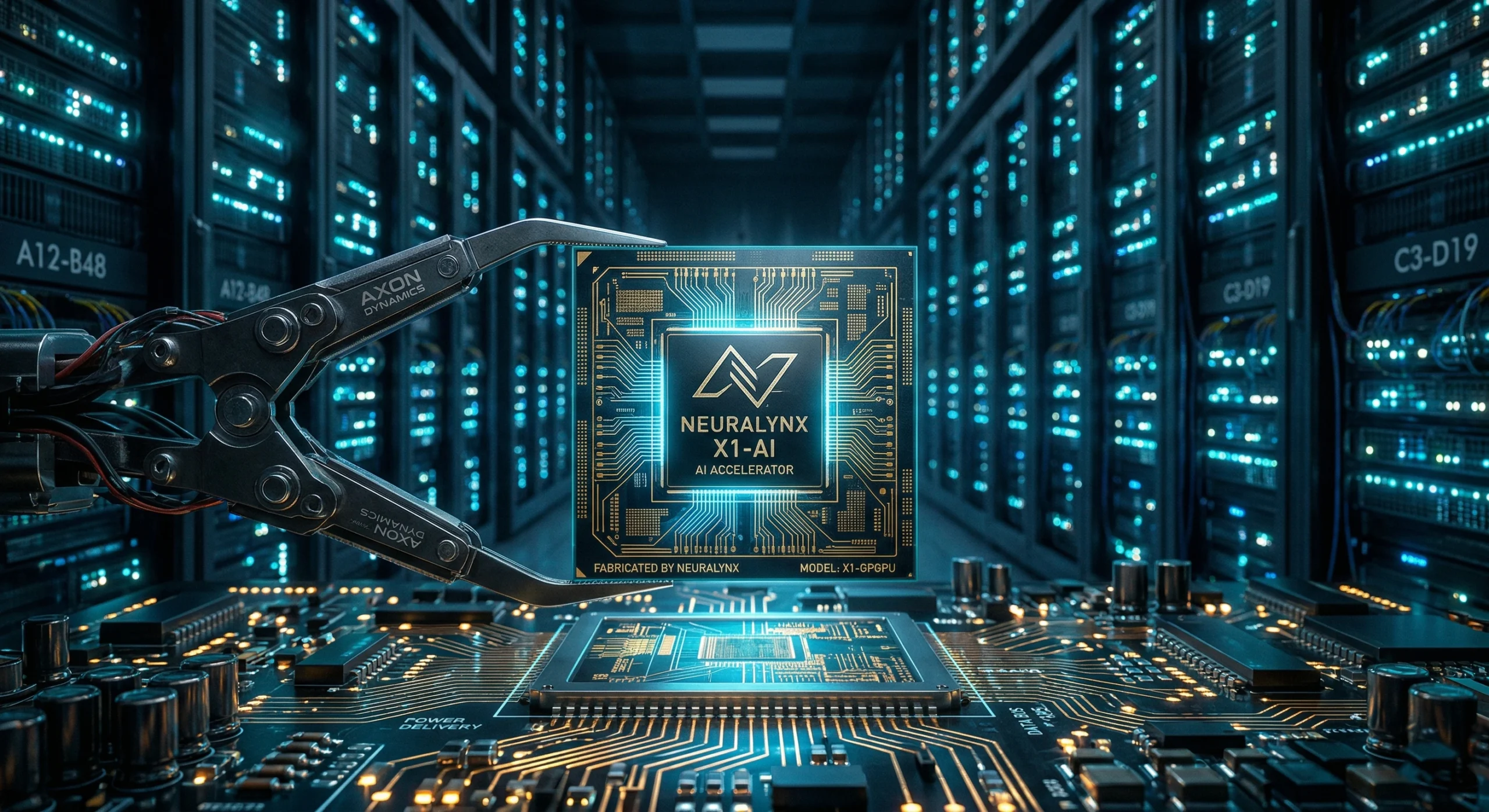
AI Infrastructure: Why People Are Buying Chips Like They'll Run Out Tomorrow
Behind every AI model that answers your questions or generates a video clip is a huge amount of hardware – processors, servers, data centers, fiber optic cables. In 2026, the demand for all of these will far exceed the available supply. At Altanet Craiova We believe that understanding this infrastructure is essential for anyone who wants to make good technology decisions in the coming years.
How big is the appetite for AI hardware?
The numbers are hard to imagine. By the end of 2025, organizations around the world were spending $37 billion per year for AI infrastructure – three times more than in 2024. This amount represents approximately 6% of total global spending on software as a service (SaaS – i.e. applications and platforms accessed via the internet with a monthly or annual subscription).
Demand for computing power outpaced supply in 2025 and shows no signs of stabilizing anytime soon. Companies are reserving processing capacity months or even years in advance.
Who makes the hardware for AI?
Not all processors are the same. Those used for AI are much more specialized than a typical laptop processor:
- NVIDIA remains the undisputed market leader, with the H200, B200 and GB200 series – graphics processors (GPUs – graphics processing units) optimized specifically for training and running AI models. A single H200 processor costs between $30,000 and $40,000.
- AMD advances with competitive alternatives at lower costs, gaining ground especially in data centers.
- Intel, Google, Amazon, Microsoft they have developed their own specialized AI processors (called ASICs – application-specific integrated circuits), optimized for their internal needs.
- Huawei and Cambricone (China) are producing competitive processors that circumvent US export restrictions, fueling China's AI development.
What AI infrastructure spending looks like
The graph below shows the evolution of global spending on AI infrastructure and the distribution by hardware type:
$12B
$25B
17%
Actual / estimated data
Projection
Cloud, hybrid or on-premises – where does AI work?
Not all companies can afford or want to buy their own processors. In 2026, there are three main models for accessing AI infrastructure:
- Cloud: you pay for what you use, without initial investment. Amazon AWS, Microsoft Azure and Google Cloud offers access to top AI processors via subscription. Advantage: flexibility. Disadvantage: costs can increase quickly at high volume.
- Hybrid: some of the processing is done in the cloud, some on-premises. Estimates show that 751% of AI used in large companies will be on hybrid infrastructures by 2028.
- Local (Edge AI): small models that work directly on your phone, laptop or industrial equipment, without an internet connection. In 2026, this option went from experimental to commercial reality.
What's next?
Kaoutar El Maghraoui from IBM anticipates the emergence of a new class of specialized processors for AI agents – different from today's GPUs, optimized for tasks specific to autonomous agents. The competition is no longer on models, but on integrated systems. In 2027, 70% in organizations will prioritize aligning investments in AI infrastructure with measurable business results – they no longer invest anyway, but strategically.
If your company uses or plans to use AI and you want to understand which infrastructure suits you best, the team Altanet Craiova can help you with a concrete evaluation. Visit our website contact and let's discuss.
This article is part of Altanet's series on AI trends in 2026. Next article: AI Security: The New Types of Attacks That No Classic Antivirus Protects You From. See also the complete guide to the series.

Leave a reply