

AI Geopolitics: What the Tech War Between the US and China Looks Like
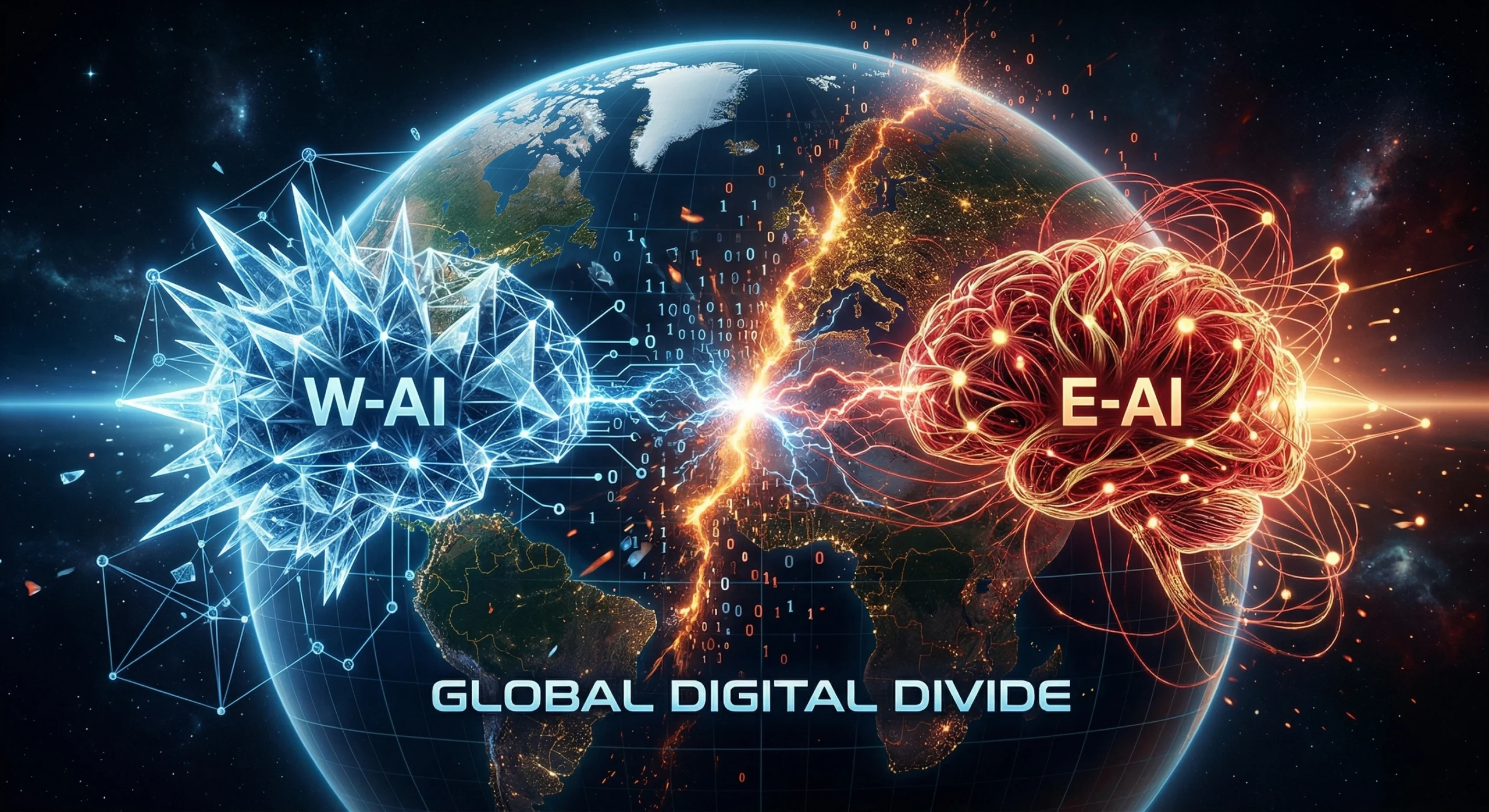
Artificial intelligence is no longer just a matter of technology. In 2026, it has become a subject of international politics, national security, and economic competition at the highest level. The US and China are building two separate AI ecosystems, with different rules, different models, and different visions of what the world's digital future should look like. At Altanet Craiova We believe it is important to understand this dynamic – because the decisions made in Washington and Beijing affect us all, including us, ordinary technology users.
Where did it all start?
Tensions between the US and China over AI are not new, but they have escalated dramatically over the past two years. It all started with the US’s export restrictions on advanced processors – particularly those made by NVIDIA. The stated goal: to slow China's AI-based military and surveillance development.
China responded in two ways:
- He invested heavily in its own processor manufacturers – Huawei and Cambricon – which now produce competitive alternatives, even if not at the level of the most advanced American processors.
- He emphasized efficiency. – Chinese models such as DeepSeek have demonstrated that you can achieve top performance with fewer computing resources, thus reducing dependence on American hardware.
The DeepSeek case – the surprise that scared Silicon Valley
In January 2026, the launch of DeepSeek V4 caused a real shock in the technology world. A Chinese model, developed with less powerful processors than American ones, achieved performance comparable to GPT-5 – at a cost 50 times lower.
But the controversy didn't stop there. anthropos revealed that DeepSeek, along with other Chinese companies such as Moonshot AI and MiniMax, generated over 16 million exchanges by approximately 24,000 fake accounts to extract the knowledge of the Claude model. In short: they tried to "copy" the capabilities of an American model through systematic and automated interrogations.
What does the gap between the two camps look like?
The graph below shows the evolution of the technological gap between the US and China in AI, measured in months of China's delay compared to the most advanced American models:
1-3 months
3-6 months
Small gap (under 6 months)
Significant gap
Two internets, two AI worlds?
The most worrying long-term scenario is not who has the better model, but fragmentation. By 2026, the outline of two separate AI ecosystems is already visible:
- Western ecosystem: dominated by OpenAI, anthropos, Google and Microsoft, with an emphasis on transparency, regulation and user rights.
- The Chinese ecosystem: dominated by DeepSeek, Alibaba (Qwen), Baidu and ByteDance, with an emphasis on efficiency, low cost and close integration with the state.
The two ecosystems have different standards, different privacy policies, and different views on what an AI model is or is not allowed to do. Interoperability – that is, the ability for systems in one ecosystem to work together with those in the other – is becoming increasingly difficult.
What does this mean to you?
If you’re using AI tools in your business, the origin of the model matters more and more. The data you feed into a Chinese model is subject to different rules than the data you feed into an American or European model. European regulations – particularly the EU AI Regulation, due to be implemented in 2026 – will impose clear standards on which models can be used in certain sensitive contexts.
Team Altanet Craiova follow these developments and it can help you understand what they mean specifically for your business. Visit our website contact and let's discuss.
This article is part of Altanet's series on AI trends in 2026. Next article: AI Regulation in 2026: Laws Starting to Keep Up with Technology. See also the complete guide to the series.

Leave a reply