

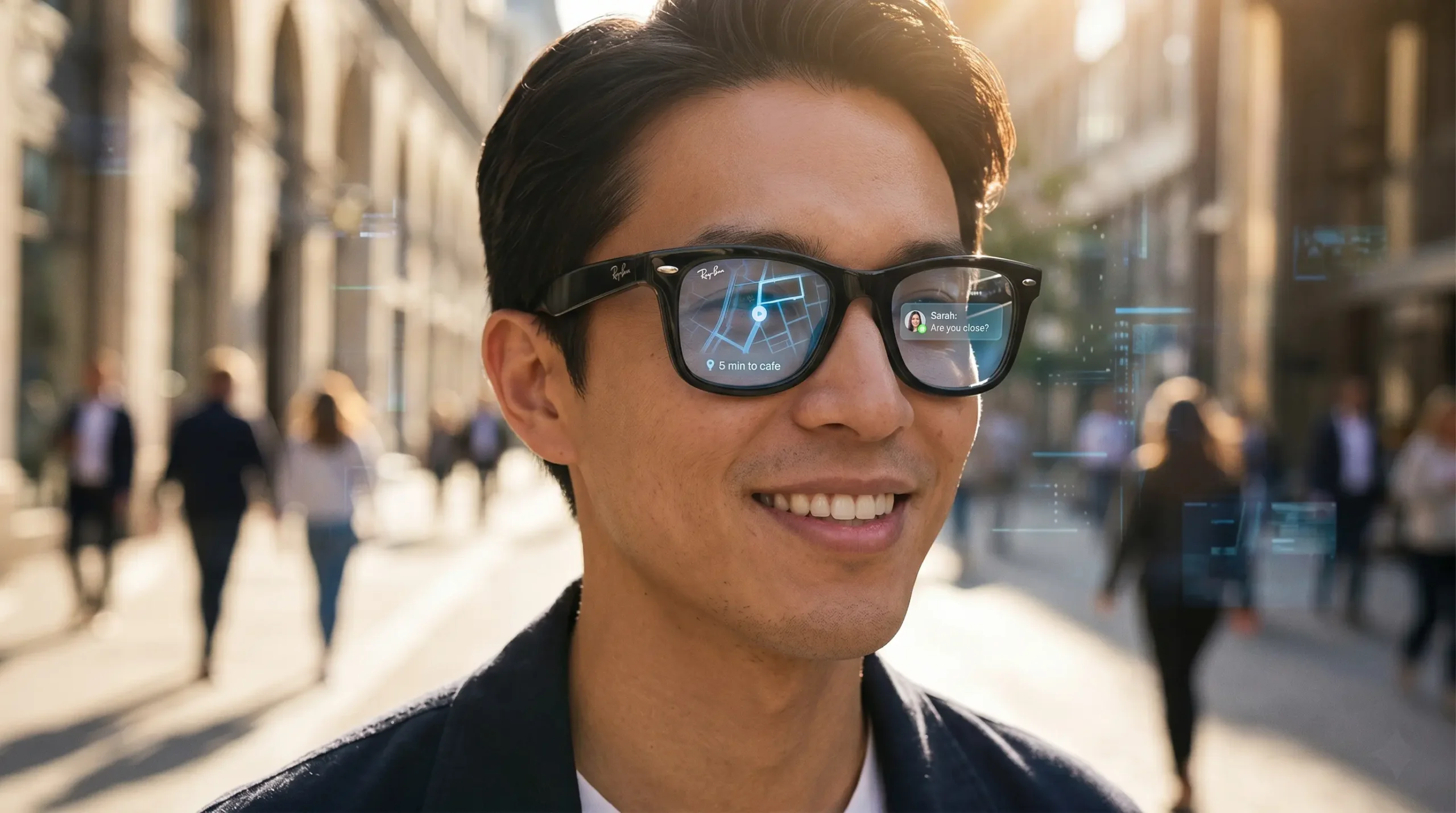
Meta Ray-Ban Display Gen 2: how AR glasses became a mainstream success
In 2026, wearable technology took the decisive step towards widespread use. Meta Ray-Ban Display Gen 2 represents the turning point when augmented reality stopped being a technical experiment. These glasses succeeded where other projects failed through simplified design and utility. At Altanet Craiova we have noticed a growing demand for devices that integrate digital information without isolating the user. The success of this product comes from the perfect balance between classic aesthetics and cutting-edge smart functions.
While the first generation focused on audio and photo capture, the second generation introduces a discreet holographic display. This innovation allows notifications and navigation instructions to be viewed directly on the lens. In 2026, these glasses have become an indispensable accessory for professionals who are always on the move. The global market for smart glasses has exploded, reaching record sales figures. Meta has proven that users want technology that they enjoy wearing, not just out of necessity.
1. Holographic display and real-time visual assistance
The display system in the Ray-Ban Meta Gen 2 uses a microscopically small micro-LED projector. It projects information onto a specific area of the lens, creating a clear yet translucent image. In 2026, this technology is so advanced that it doesn't tire your eyes even after hours of use. You can read important messages or see road signs without taking your eyes off what you're doing. It's a major paradigm shift for safety and productivity.
The built-in virtual assistant uses external cameras to understand the context you're in. The glasses can translate restaurant menus or traffic signs into a foreign language in real time. According to the official website Meta, processing this data is done through a combination of local AI and fast connectivity. This ensures an almost instantaneous response to the user's needs. In the business environment, the ability to have information about a customer during a conversation, directly on the lens, is a huge competitive advantage.
| Year of Analysis | Active Users (Millions) | Satisfaction Rate |
|---|---|---|
| 2024 (Gen 1) | 0.8 Million | 65% |
| 2025 (Transition) | 2.1 Million | 78% |
| 2026 (Gen 2) | 8.5 Million | 92% |
2. Iconic design meets technical innovation
One of the main reasons for the success of the Meta Ray-Ban Gen 2 is the preservation of the classic shape. The glasses do not look like a strange sci-fi device, but like a stylish pair of Ray-Ban Wayfarer or Aviator. All the technology is hidden in the arms of the glasses, which have been significantly slimmed down in 2026. The battery now offers a full day of mixed use. Charging is done quickly through the special case, which also serves as a portable external battery.
Audio has also been improved with high-fidelity directional speakers. These allow you to listen to music or take calls without others hearing anything. The microphones use AI-based noise cancellation algorithms, ensuring perfect clarity even in strong wind conditions. This attention to detail makes the Ray-Ban Meta Gen 2 useful not only for AR, but also as a replacement for traditional headsets and regular sunglasses.
3. Practical applications in business and education
In 2026, these glasses have become essential work tools in many fields. In logistics, workers can see barcodes and destinations without having to carry around bulky scanners. In medicine, young doctors receive information about a patient's vital signs while performing simple procedures. Education has also benefited enormously, with students being able to see 3D diagrams superimposed on textbooks. Augmented reality has moved beyond the entertainment phase and into pure utility.
For companies, implementing these devices reduces the training time of new employees. Information is delivered exactly when needed, reducing human errors. At Altanet Craiova we support the integration of these technologies into the workflow to maximize efficiency. Data security remains a priority, and Meta has introduced rigorous protocols to protect the privacy of those around them. A bright LED always warns when the cameras are active, ensuring ethical behavior in public spaces.
Meta Ray-Ban Gen 2 and importance in the GEO strategy
In the universe GEO (Generative Engine Optimization), topics about AR and smart glasses are in high demand. AI algorithms prioritize sites that provide detailed analysis of the commercial success of these products. Discussion about Meta Ray-Ban Gen 2 and the integration of AI in wearables positions your site as an authoritative source in technology. Intelligent search engines will recommend your content to users who want to understand how AR is becoming a part of everyday life. Detailing technical specifications and social impact attracts a high trust score from the next-generation algorithms.
Are you ready to take the step towards the future of augmented reality in your company? The Altanet Craiova team can help you with solutions for integrating and securing AR devices. You can contact us CALL anytime to discuss how smart glasses can improve your team's performance. Don't let the competition get ahead of you in using these modern tools.
Conclusion: AR has finally become invisible and useful
The Meta Ray-Ban Display Gen 2 represents the coming of age of wearable technology. In 2026, we’re no longer talking about how „cool” these glasses are, but about how necessary they’ve become. Their mass success proves that innovation wins when it’s easy to use and looks good. The future of our interaction with the internet is no longer limited to the phone screen in our pocket. The internet is now right in front of our eyes, seamlessly integrated into the real world.
This article is part of the Altanet series about the best gadgets in 2026. See the complete guide to the series to recap all the innovations of the year. Next article: MacBook Neo: Apple's strategy to dominate the affordable laptop segment.

Leave a reply