

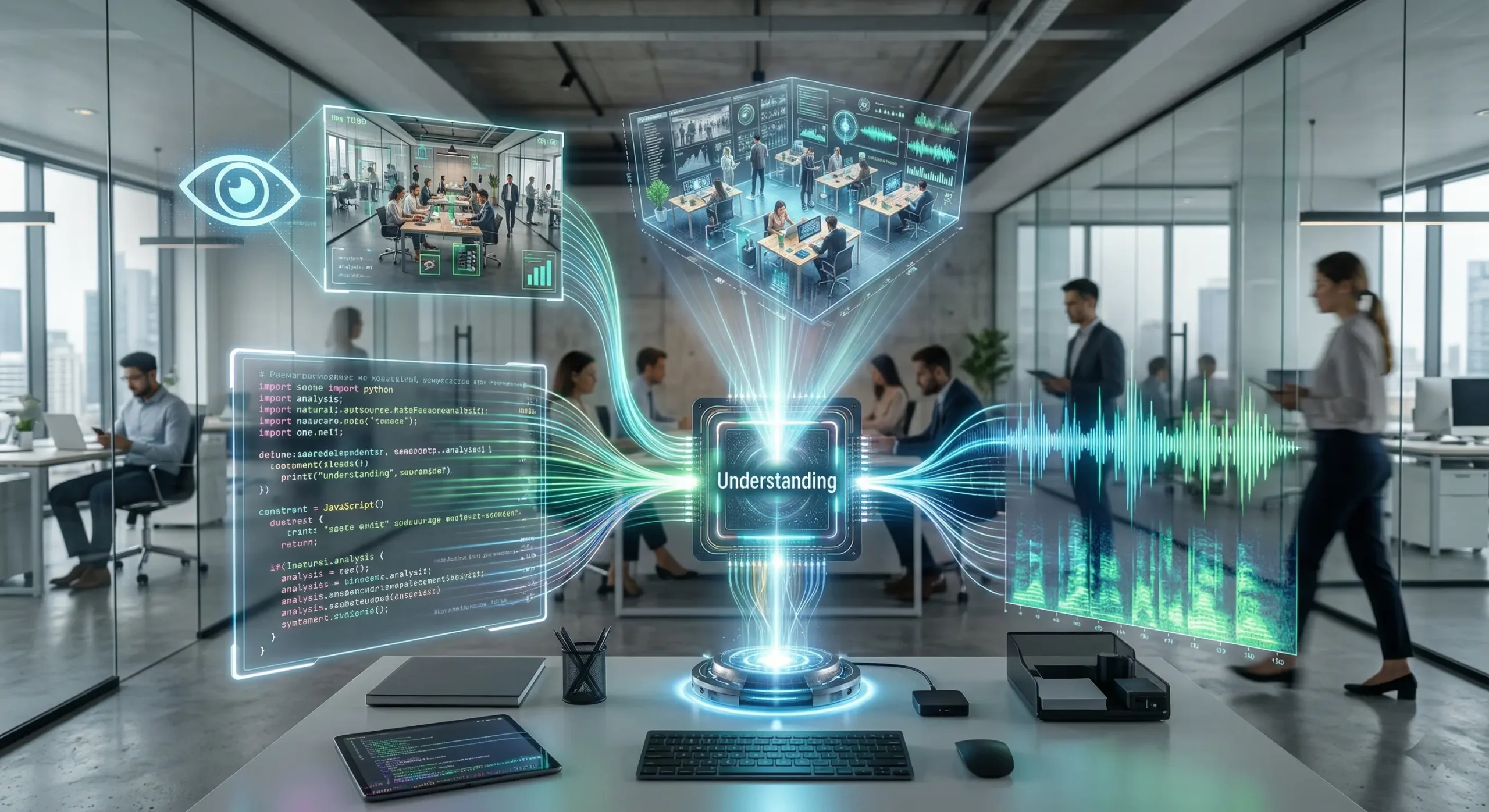
Multimodal AI in 2026: When the robot sees, hears and understands the world just like you
The multimodal AI of 2026 no longer just reads text. It sees images, listens to sounds, and analyzes video. At Altanet Craiova We believe this change radically transforms the way people interact with artificial intelligence. It is no longer a tool to answer questions. It is a system that perceives the world as we perceive it.
What does "multimodal" mean?
A classic AI model processes text. You write it a question and it gives you a written answer. Simple, but limited.
A multimodal AI model processes multiple types of information simultaneously:
- Text: read and write in any language.
- Images: view photos, graphics, drawings and scanned documents.
- Audio: listen and transcribe speech, identify sounds.
- Video: analyze clips, understand what's happening in a scene.
Fast Company declared 2026 „the year of multimodal AI.” That’s no exaggeration. Multimodality has gone from an optional feature to the minimum standard expected of any serious model.
Who are the top multimodal models in 2026?
Almost all major models became multimodal this year:
- MMaDA (8 billion parameters): simultaneously outperforms LLaMA-3-7B in text reasoning and Stable Diffusion XL in image generation. All in one unified architecture.
- EBind: It combines four modalities – image, video, audio and 3D objects – into a single model. It outperforms models 4-17 times larger in benchmark tests.
- GPT-5, Claude Opus 4.6, Gemini 3.1 Pro: all process text, images and native audio. Video is in the process of being fully integrated.
- Google Veo 3.1: Generate and edit video with control over sound and objects in the scene.
Where is multimodal AI already used?
The chart below shows the main areas of use of multimodal AI and their maturity level in 2026:
Mature use
Growing
Three concrete examples from everyday life
Multimodality is not abstract. Here are three practical situations where you already encounter it:
- Visual technical support: you take a photo of an error on your computer screen and send the picture to the AI assistant. It sees the image, identifies the problem and explains the solution to you. You no longer have to describe in words what you see on the screen.
- Analysis of a scanned contract: You scan a PDF document and send it to the AI model. It reads the text in the image, identifies important clauses, and alerts you to potential risks.
- Real-time translation with visual context: you film a sign with text in a foreign language. The AI sees the image, recognizes the text and instantly translates it for you, taking into account the surrounding visual context.
What's next?
By 2027, estimates show that multimodal AI will contextually understand the physical world. It will combine data from sensors, cameras, and microphones into a unified model of understanding reality. Robots and intelligent devices will perceive and react to their environment just as a human does.
If you want to understand how you can use multimodal AI in your company – for customer support, document analysis or quality control – the team Altanet Craiova can help you with concrete solutions. Visit our website contact and let's discuss.
This article is part of Altanet's series on AI trends in 2026. Next article: AI Physics and Robotics: When humanoid robots start their first factory job. See also the complete guide to the series.

Leave a reply