
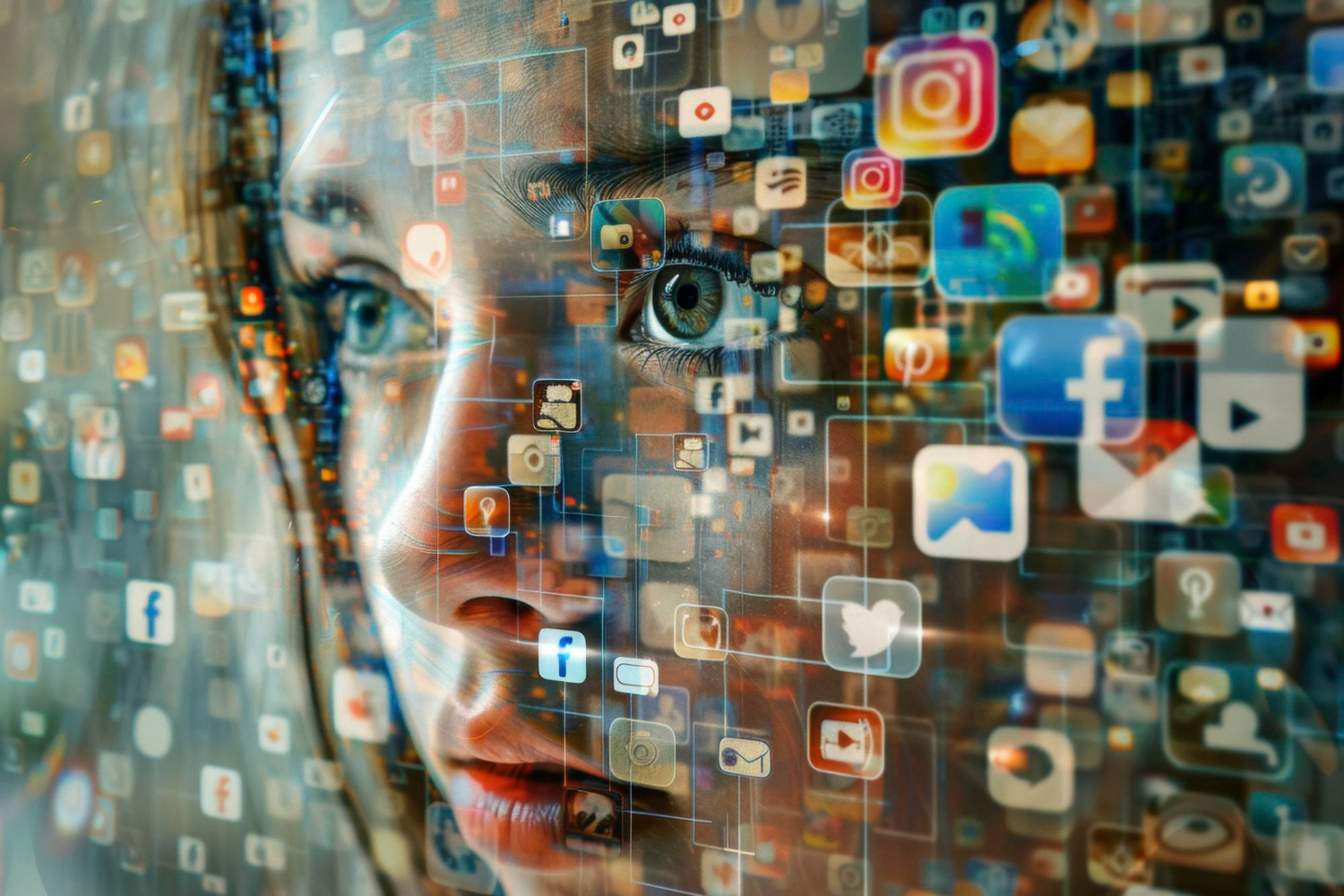
The mind behind your feed: how artificial intelligence shapes what you see on social media in 2025!
Why does your feed seem to read your mind?
Have you ever stopped to wonder why your Facebook, Instagram or TikTok feed seems to anticipate your interests with astonishing precision? Or why, after searching for a product online, you are "followed" by ads for it across all platforms? The answer lies largely in the power of artificial intelligence (AI). In 2025, AI is the invisible engine that personalises and shapes our experience on social networks in a profound way.
How do these social media algorithms work?
At the core of this personalisation are complex machine learning algorithms. They analyse a huge amount of data about your behaviour to predict what will keep you engaged.
- Direct interactions: Likes, shares, comments and saves are clear signals to the AI about the content you enjoy.
- Time spent: How long you linger on a post or a video is a crucial indicator. Even a pause of a few seconds in your scrolling is recorded.
- Content type: Do you prefer video, images or text? On which topics? The algorithm learns your format and topic preferences.
- Third-party data: Many platforms collect data about your activity on other websites (with the consent given when you created your account). They know which news sites you read or which products you look for in online shops.
AI, advertising and the example of retargeting in Romania

A highly visible application of AI is targeted advertising. Did you search for a laptop on eMAG? It is no coincidence that you will see laptop ads on Facebook or Instagram shortly afterwards. This process is called retargeting (or remarketing). Tracking pixels on shop websites tell social platforms what interested you, and the AI serves you personalised ads.
Pros and cons: an overview
AI-based personalisation has both significant benefits and risks.
Benefits: a more relevant experience
The main advantage is that you are exposed to content that better matches your interests. Algorithms can suggest new accounts or topics, and advertising becomes, in theory, less intrusive and more useful.
Risks: filter bubbles and privacy
The biggest drawback is the creation of "filter bubbles" (echo chambers). Constantly exposed to content that confirms your opinions, you risk isolating yourself from diverse perspectives. During election periods or on social issues, this can lead to polarisation. In addition, the massive collection of data raises legitimate concerns about privacy and how our information is used.
How can you navigate more consciously in the AI era?
- Be aware: Understanding that your feed is shaped by algorithms is the first and most important step.
- Diversify your sources: Actively seek out different perspectives and follow accounts with varied opinions. Don't rely only on what the algorithm "serves" you.
- Manage your settings: Explore the privacy options in each app to control, as far as possible, the data collected.
- Interact deliberately: Your likes "train" the AI. Be selective about the signals you send.
For more interesting information about social media, also read our article: TikTok – Evolution, Impact and Outlook in Craiova and Worldwide
Conclusion: an informed user is in control
Artificial intelligence has radically transformed the way we consume information in 2025. Although personalisation can bring benefits, it is crucial to be aware of the mechanisms behind it and of the potential drawbacks. Understanding these processes is essential. For companies that want to use the power of technology constructively, working with experts in customised IT solutions, such as Altanet Craiova, becomes a key factor in navigating the digital landscape. In the end, you are in control of the click – use it wisely.