
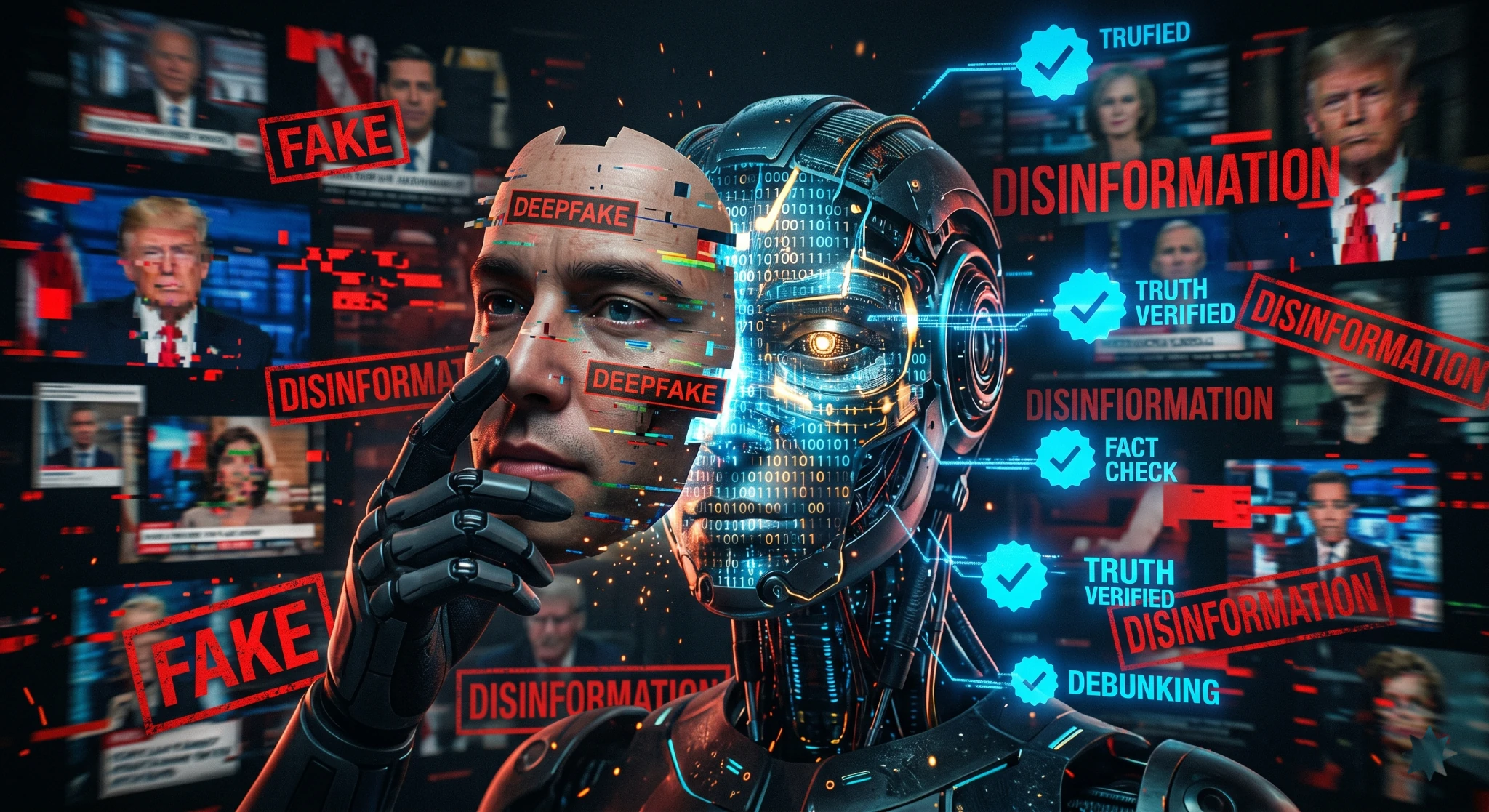
In 2026, digital truth is harder and harder to identify. Deepfake technology makes it possible to create fake videos or audio messages that look perfectly real. At Altanet Craiova we have seen how AI disinformation can destroy a company's reputation within minutes. A single fake clip of the company's director can cause panic among investors or customers.
According to the Europol report, manipulating public opinion through deepfakes has become an economic weapon. Hackers no longer attack just servers, but people's trust. They use manipulated images to launch fake news about products or about a business's financial health.
How does AI disinformation work in the business environment?
Attackers use advanced algorithms to replicate the facial expressions and voices of opinion leaders. In 2026, this material is spread quickly on social media. It is created to provoke strong emotional reactions. Often, by the time the company gets to deny the information, the damage is already done. Market share can fall after a well-orchestrated manipulation campaign.
It is not only about complex video clips. AI disinformation also includes the generation of fake reviews on an industrial scale. Unfair competitors can use bots to flood platforms with non-existent complaints. This tactic directly affects consumer trust and your brand's position on the market.
The main forms of digital manipulation through AI
Deepfake technology shows up in several ways that are dangerous for business:
- Video deepfakes: Fake speeches by executives announcing bankruptcies or radical changes of strategy.
- Manipulated audio messages: Fake voice instructions sent to the finance department for urgent payments.
- Synthetic documents: Letters of intent or contracts that appear to be signed by real partners.
- Fake virtual identities: Employee profiles created entirely by AI in order to spy on internal communication.
How can you protect your company's reputation?
To fight AI disinformation, Altanet Craiova recommends a proactive verification strategy. Here are the measures you can take immediately:
- Implementing digital signatures: Certify every official video or audio communication using encryption methods.
- Brand monitoring: Use tools that scan the internet to detect the appearance of deepfake material about your company.
- Educating the public: Teach your customers and employees which are the company's official communication channels.
- Rapid verification procedures: Set up a clear protocol for denying fake news in under an hour from its appearance.
Conclusion
In 2026, AI disinformation is a major challenge for every business leader. A well-made deepfake can fool anyone if there are no safety filters. The fight for truth in the digital space requires technology, but also constant vigilance. Communication safety is now a top priority for business stability.
This article is part of the Altanet series on cyber threats in 2026. Next article: Human Resources: How the lack of experts affects your company's security. See also the complete guide to the series.