
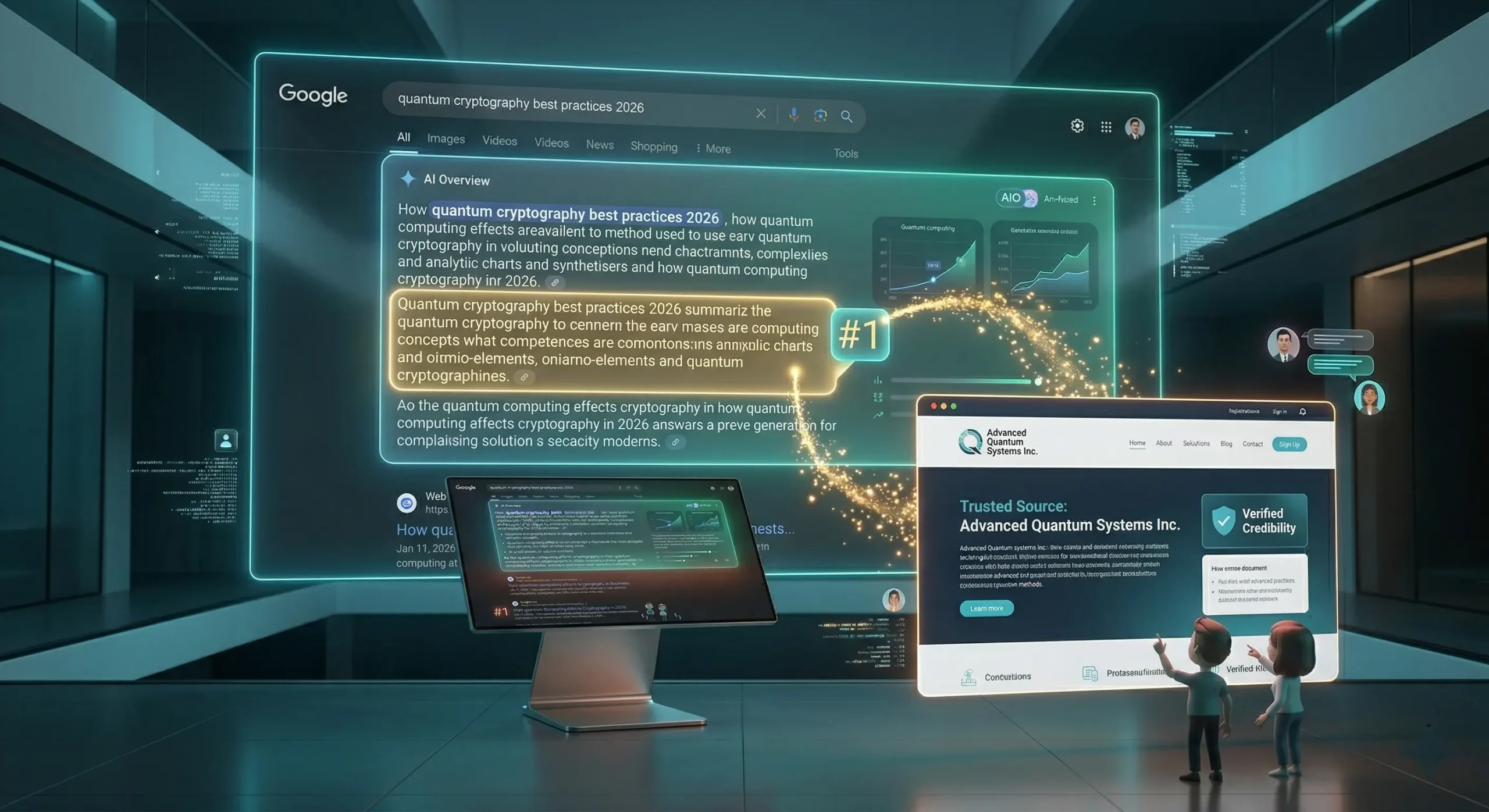
Did you know you can appear in the AI-generated answers of Google even if your website is not on the first page? This is not a technical glitch – it is a real opportunity, created by a new discipline called GEO. At Altanet Craiova we believe GEO will soon become as important as traditional SEO – and the earlier you start, the bigger your advantage.
What is GEO?
GEO stands for Generative Engine Optimisation – in plain terms: optimisation for AI-based search engines (artificial intelligence). It is the process of preparing your content to be chosen and cited by AI as a trusted source when someone asks a question on Google.
The difference from SEO (Search Engine Optimisation – optimisation for classic search engines) is essential:
- Classic SEO: you optimise the page so that it appears as high as possible in Google's list of links.
- GEO: you optimise the page so that it is selected by AI as the source from which it draws information for the answer generated directly in Google.
The two do not exclude each other – they complement each other. A well SEO-optimised site already has a good base for GEO. But GEO adds a new layer of rules.
Why does GEO matter in 2026?
With the expansion of Google AI Overviews – the AI-generated answer blocks that appear above the classic results – a site's visibility no longer depends only on its position in the list of links. It also depends on how often it is cited as a source in these answers.
The chart below shows how traffic sources for websites change as GEO grows:
Main source of visibility
Secondary source
How does GEO work in practice?
When someone asks something on Google, the AI model (Gemini) quickly reads hundreds of pages and picks the clearest, best-structured and most trustworthy ones as sources for its answer. It doesn't necessarily look for the site with the most traffic – it looks for the best answer to the question asked.
This means a smaller site with clear, well-structured content can be cited by AI ahead of a big site with long, unclear texts.
What can you do for GEO, concretely?
Here are five practical actions you can apply right now:
- Answer questions directly. Structure your articles around clear questions: "What is X?", "How does Y work?", "Why Z?". AI looks for direct answers, not long introductions.
- Use verifiable data and figures. Sources with concrete statistics are preferred by AI over vague texts. Cite studies, reports or official data.
- Add structured data. These are small snippets of code added to the page that help the AI understand more quickly what it is about. In WordPress, plugins such as Yoast SEO generate them automatically.
- Strengthen trust in your site. Real authors with bios, links received from other reputable sites (backlinks – that is, recommendations from other sites), complete "About us" and "Contact" pages – all of these signal to AI that you are a trusted source.
- Write clearly and simply. Short sentences, a logical structure and clear explanations are exactly what AI looks for. Complicated texts with excessive technical jargon are harder to process and cited less often.
A concrete example
Say you have a car repair shop in Craiova. If your website has a clear page answering the question "How much does a car service cost in Craiova?", with prices, steps and contact information, Google's AI has every reason to cite you when someone asks that question – even if you are not on the first page for the classic search.
What comes next?
According to Creativ Digital, GEO will become a standard discipline in all marketing agencies by 2027. Classic SEO metrics – position on Google, number of clicks – will be complemented by new indicators: how often your site is cited by AI and how large your "share of voice in AI answers" is (that is, the percentage of AI answers in which you appear, compared with competitors).
If you want to know how to start optimising your website for GEO, the Altanet Craiova team can help you with a concrete strategy. Visit our contact page and let's talk.
This article is part of the Altanet series on changes in social media and SEO in 2026. Next article: Local SEO 2026: why your place on the map matters more than ever. See also the complete guide to the series.