
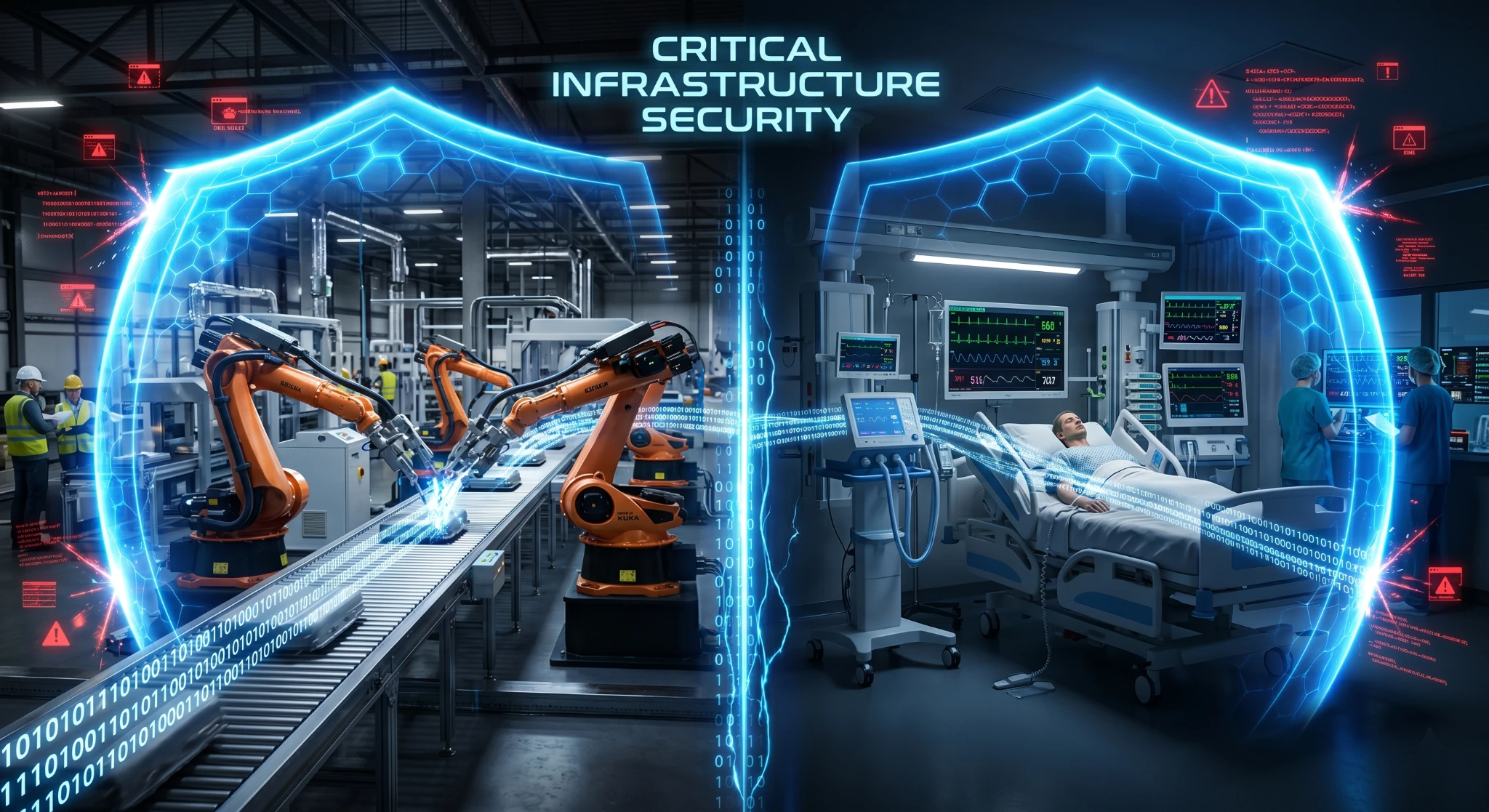
In 2026, cyberattacks no longer target only financial losses; they can paralyse services vital to society. Critical infrastructure, especially medical facilities and automated factories, has become a prime target for groups seeking maximum impact. At Altanet Craiova we have seen growing concern among managers in these sectors, because forced digitalisation has left behind security gaps that can endanger human lives or halt entire production lines.
According to the ENISA report, attacks on industrial and medical systems have become more sophisticated, using ransomware not just to lock files but to physically stop machinery or medical equipment from working. This convergence between the digital and physical worlds makes protection more complex than ever.
Why are healthcare and manufacturing such vulnerable targets?
Many production facilities and hospitals use old (legacy) equipment that was never designed to be connected to the internet. In 2026, integrating it into modern networks without adequate protection is the equivalent of an invitation to attackers. In a factory, a single compromised sensor can report false data, leading to major mechanical failures or non-compliant finished products.
In healthcare, the situation is even more dramatic. Patient records contain extremely sensitive data, which is worth a fortune on the black market. Even worse, an attack on a hospital network can block access to intensive care ventilators or medication dosing systems, turning an IT incident into a humanitarian crisis.
The main security challenges in critical infrastructure
Several factors increase the level of risk in these essential industries:
- IT-OT convergence: Joining office networks (IT) with machine operation networks (OT) lets viruses travel from employees' e-mails straight into the factory's control panels.
- Systems that cannot be shut down: Unlike a mail server, an industrial furnace or an MRI scanner cannot be switched off at any time to install security patches.
- Intellectual property theft: In manufacturing, industrial espionage is the main driver, with attackers looking for production recipes or design plans.
- Lack of specialised staff: Many hospitals and factories have no dedicated cybersecurity teams able to monitor threats in real time.
Protection measures for essential sectors
To secure these critical systems, Altanet Craiova recommends a layered and rigorous approach:
- Network isolation (air-gapping): Physically or logically separating industrial control systems from the public internet.
- Continuous traffic monitoring: Implementing solutions that detect anomalies in the behaviour of machinery or medical databases.
- Incident response plans: Clear procedures for switching to manual mode or backups in the event of an attack, so as not to endanger lives or expensive equipment.
- Physical and digital access control: Strictly verifying every person or device (such as a USB stick) that connects to the infrastructure.
Conclusion
Protecting critical infrastructure is not just a technical requirement but an ethical responsibility in 2026. As hospitals and factories become smarter, they also become more exposed. Only through constant vigilance and cooperation with experts in the field can we prevent technological progress from turning into a major vulnerability.
This article is part of the Altanet series on cyber threats in 2026. Next article: AI Vishing: How to Recognise the Cloned Voice of a Business Partner. See also the complete guide to the series.