
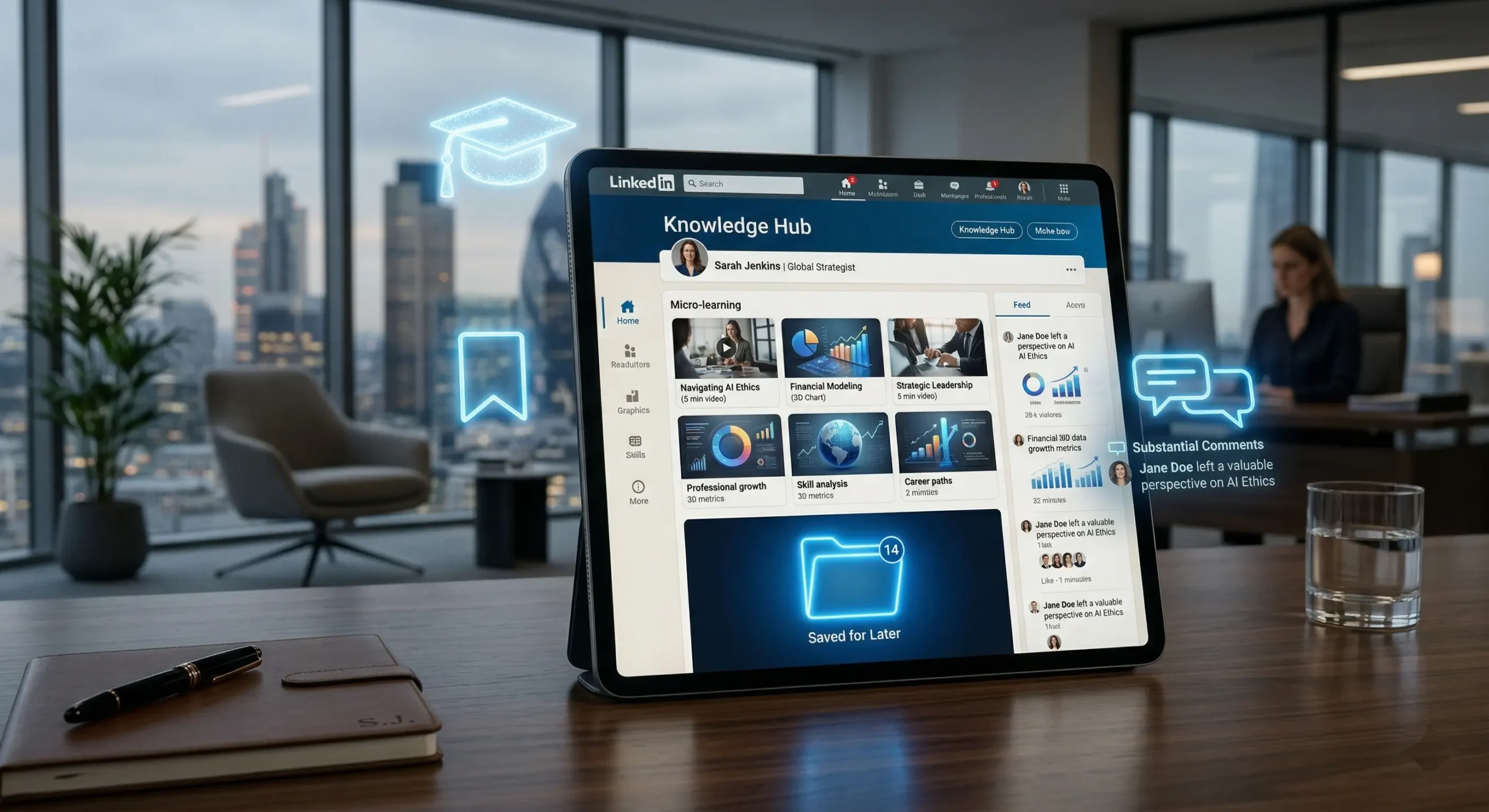
If you only use LinkedIn to update your CV or accept connection requests, you are missing out on one of the most valuable platforms for building professional authority in 2026. LinkedIn has changed significantly – and the rules for becoming visible have changed just as much. At Altanet Craiova we believe LinkedIn is now one of the most underrated platforms for companies that want to reach decision-makers, partners and B2B clients (that is, companies that sell to other companies).
What changed in the LinkedIn algorithm in 2026?
The most important change: the LinkedIn algorithm now rewards saves, comments and shares – not likes. A like given in two seconds hardly counts anymore. In contrast, a post that someone saves or comments on with a serious reply is a strong signal that the content is genuinely valuable.
What else has changed:
- AI recommends what to post: LinkedIn has integrated an artificial intelligence (AI) system that analyses your industry and your network of connections and suggests relevant topics to post about – based on what generates engagement in your field.
- Reserve Ad Slots (advertising slots booked in advance): brands can now reserve premium positions in the feed before a campaign, similar to buying ad space in traditional media.
- Live video and long-form video get priority: LinkedIn is actively pushing the video format in the feed, both live videos and longer pre-recorded ones.
- Short educational content dominates: 3-minute micro-lessons, mini case studies and quick guides are the formats with the highest engagement on the platform.
Why has LinkedIn become a learning platform?
The shift is deeper than it seems. LinkedIn is no longer just the place where you look for a job or build a network of contacts. It has become the space where professionals get informed, learn and demonstrate their expertise.
Why did this happen? Because users started looking on LinkedIn for the same kind of content they used to find on specialist blogs or in online courses. A well-written post about a concrete problem in your industry can reach thousands of interested professionals – without paying for ads.
Important signal
Signal of low importance
What should you do differently on LinkedIn in 2026?
- Write posts worth saving. Useful lists, step-by-step guides, lessons learned from real experience – these are the types of content people save to reread. Before every post, ask yourself: "Would anyone save this?"
- Start conversations, not monologues. End the post with an open question that invites comments. Substantial comments are the second most important signal for the algorithm.
- Publish educational content specific to your field. Don't write generically about "leadership" or "success". Write about concrete problems in your industry – the ones you solve every day for your clients.
- Use video, even a simple one. A video shot on your phone in which you explain a concept or present a concrete result gets more visibility than a text post.
- Be consistent, not sporadic. Two or three posts a week, published regularly, work much better than ten posts in one week followed by two months of absence.
What comes next?
According to SocialPilot, LinkedIn is clearly heading towards the status of a "mini business school" – a platform where your profession is learned and demonstrated in public. Educational content will overtake self-promotion as the dominant strategy by 2027. Those who start building authority through content now will be well ahead of those who start later.
Are you on LinkedIn but don't know where to start or what to improve? The Altanet Craiova team can help you with a concrete plan. Visit our contact page and let's talk.
This article is part of the Altanet series on the changes in social media and SEO in 2026. Next article: X in 2026: pay or disappear from the feed. See also the complete guide to the series.