
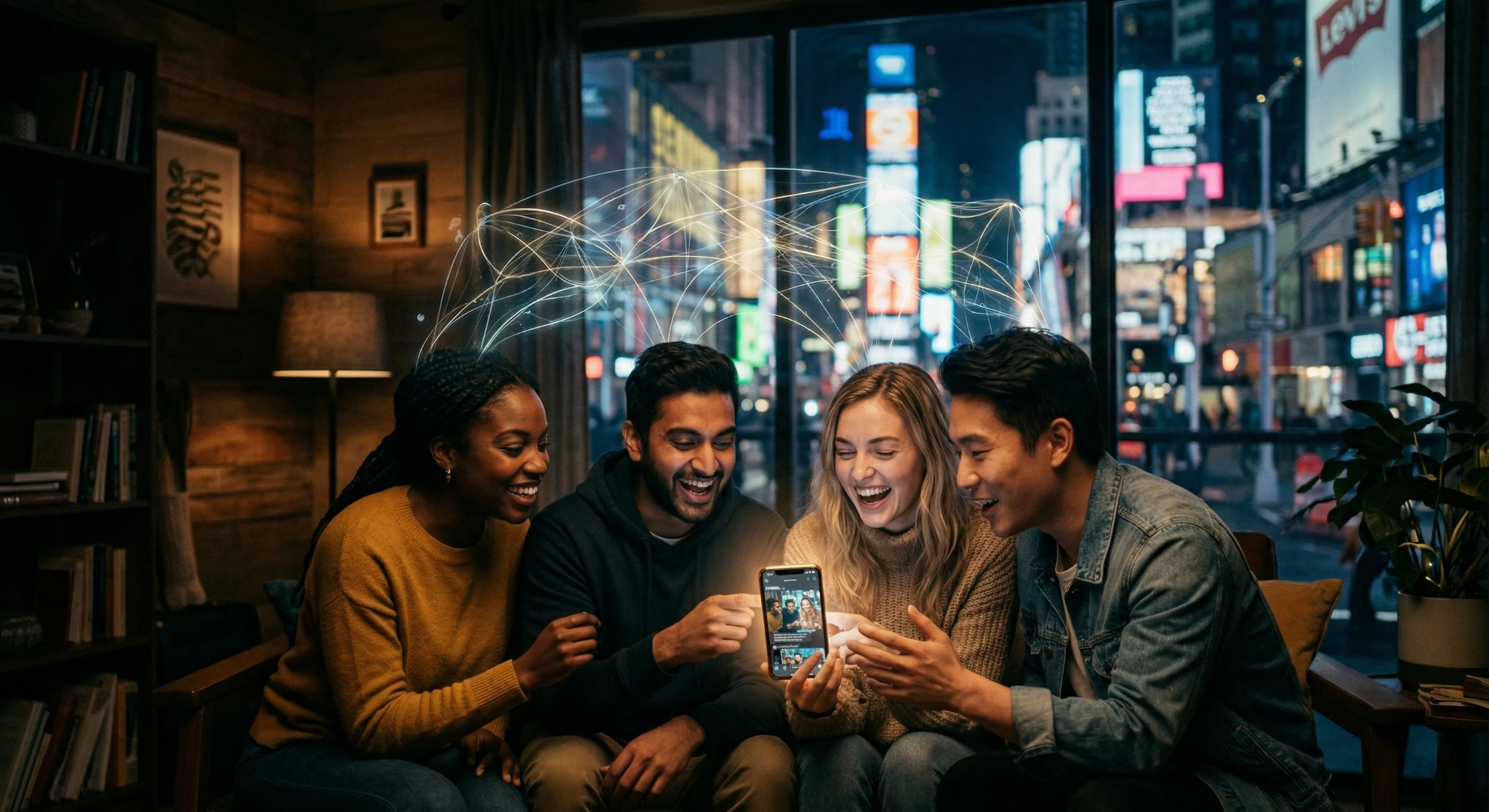
You open your social media account analytics and everything looks fine: views, reach, likes. But sales aren't keeping pace with the numbers. Or the other way round: sales are growing, but you can't explain where they come from. If this has happened to you, an important part of your brand's real activity is probably taking place in spaces you can't measure. At Altanet Craiova we believe that understanding this phenomenon is essential for any company that wants to build a lasting online presence in 2026.
What are micro-communities?
Micro-communities are small groups of people united by a specific interest, a shared value or a common experience. We are not talking about thousands or tens of thousands of members – we are talking about dozens or hundreds of people who know each other, interact frequently and trust one another.
In 2026, these groups have moved en masse from public spaces to private and semi-private ones:
- Private groups on Facebook
- Specialised servers on Discord
- Communities on Reddit
- WhatsApp or Telegram groups
- Bulletin Boards on TikTok and Close Friends on Instagram
- Specialised forums and niche newsletters
What is dark social and why can't you measure it?
We also talked about dark social in the article on DMs, but it deserves a closer look. Dark social is all the traffic generated by links shared in private conversations – through WhatsApp, email, Telegram, direct messages on any platform – that cannot be attributed to a source in classic analytics tools such as Google Analytics.
When someone copies a link from your site and sends it to a friend via WhatsApp, and the friend clicks that link, Google Analytics records the visit as "direct" – with no identifiable source. In reality, the source is a personal recommendation – the most valuable type of traffic possible.
How big is the phenomenon in 2026?
High impact
Medium or low impact
Why do micro-communities generate more ROI than public feeds?
ROI stands for Return on Investment – that is, the money or results obtained relative to the effort or investment made. Micro-communities generate superior ROI (return on investment) for three simple reasons:
- Trust is higher. A recommendation from someone in a private group you trust is worth far more than an ad seen in the feed. The buying decision comes faster and with less hesitation.
- The audience is more qualified. The people in a private group of photography enthusiasts, for example, are all potential buyers of photo equipment. You don't have to filter a broad, uninterested audience.
- Loyalty is more durable. A customer won through a private community stays loyal for longer than one attracted by a paid ad.
How do you build a presence in micro-communities?
- Come in with value, not ads. The first step in a private community is not to promote yourself – it is to help, answer questions, share useful information. Trust is built before selling.
- Build your own micro-community. A private Facebook group, a Telegram channel or a Discord server dedicated to clients and enthusiasts in your field creates a space you control and in which the relationship with the community is direct.
- Create exclusive content for the community. Offers available only to members, advance information, access to events – these motivate people to stay active in the community.
- Accept that you won't measure everything. Part of the impact of micro-communities and dark social will never show up in analytics. That doesn't mean it doesn't exist – it means classic measurement tools can't capture it.
What comes next?
According to Metricool, niche communities will generate a higher ROI than public feeds in the coming years. Brands that build their own communities now will have a lasting competitive advantage over those that rely exclusively on paid or organic reach from the feed.
Do you want to know how to build a micro-community around your business and how to integrate it into your marketing strategy? The Altanet Craiova team can help you with a concrete plan. Visit our contact page and let's talk.
This article is part of the Altanet series on the changes in social media and SEO in 2026. Next article: Influencer marketing 2026: why a creator with 10,000 followers can beat one with a million. See also the complete guide to the series.