
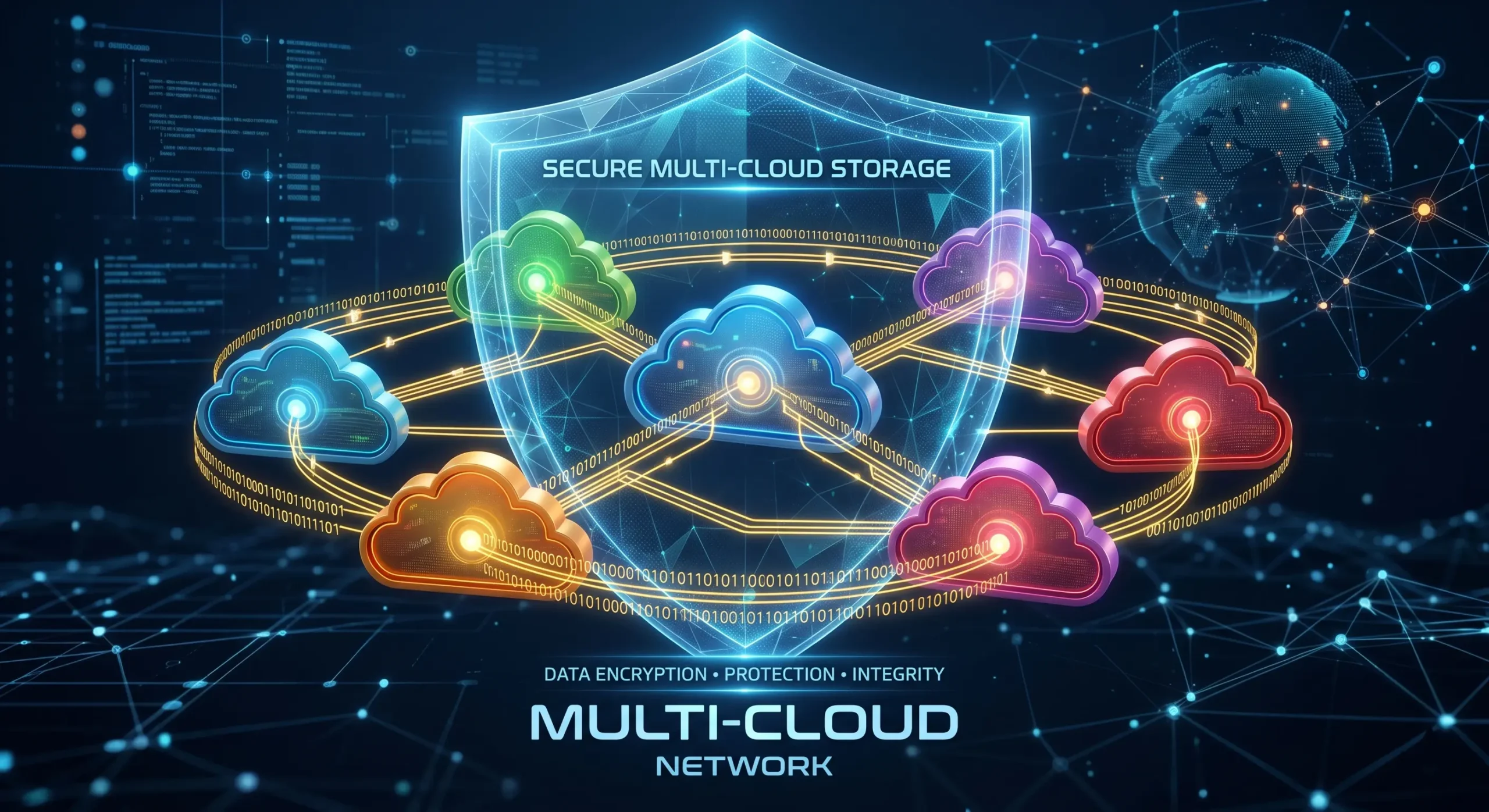
In 2026, most companies no longer rely on a single cloud service provider. A multi-cloud strategy offers flexibility and prevents dependence on a single partner. However, this complex architecture brings major security risks. At Altanet Craiova we have noticed that fragmenting data across different platforms creates "blind spots". These unmonitored spaces are used by attackers to infiltrate without being detected.
According to Check Point studies, misconfigurations remain the main cause of cloud breaches. In a multi-cloud environment, managing security policies in a unified way becomes a huge challenge. Hackers take advantage of the small differences between platform settings to find easy access points.
Why Is a Multi-Cloud Environment Harder to Secure?
Each cloud provider has its own security tools and protocols. In 2026, synchronising them is almost impossible without specialised solutions. Data is often moved between platforms through channels that are not properly encrypted. This constant movement of information creates dangerous opportunities for interception.
Another problem is reduced visibility into user access. It is hard to track who accessed a document if it passes through three different clouds. Without centralised monitoring, a security breach can stay active for months. Attackers can extract data gradually. They do this without triggering alerts in any of the systems.
Critical Risks in Remote Data Storage
The complexity of a multi-cloud infrastructure generates specific vulnerabilities:
- Cascading misconfigurations: A setting error in one platform can quickly spread across the entire digital ecosystem.
- Excessive access: Users are often given more permissions than they need so that applications keep working.
- Lack of uniform encryption: Data is protected differently by each provider, leaving parts of its journey completely exposed.
- Insecure interfaces (APIs): Connections between different clouds can be exploited to steal important access keys.
How Can You Secure a Multi-Cloud Infrastructure?
To reduce the attack surface, Altanet Craiova recommends centralised control. Automation plays an essential role in this process:
- Using CSPM platforms: These tools constantly monitor configurations across all clouds. They automatically fix the errors they detect.
- Implementing the Zero Trust principle: Verify the identity of every user on every access. This must be done regardless of the platform used.
- Encrypting data at the source: Protect information before it is uploaded to the cloud. That way, the provider does not hold the decryption keys.
Conclusion
Multi-cloud storage is the future. However, it comes with major security challenges in 2026. Simply moving data remotely does not provide automatic protection. Only through a clear control strategy can you turn cloud complexity into a real advantage.
This article is part of the Altanet series on cyber threats in 2026. Next article: Internet of Things: How Smart Objects in the Office Can Become Gateways for Hackers. See also the complete guide to the series.