
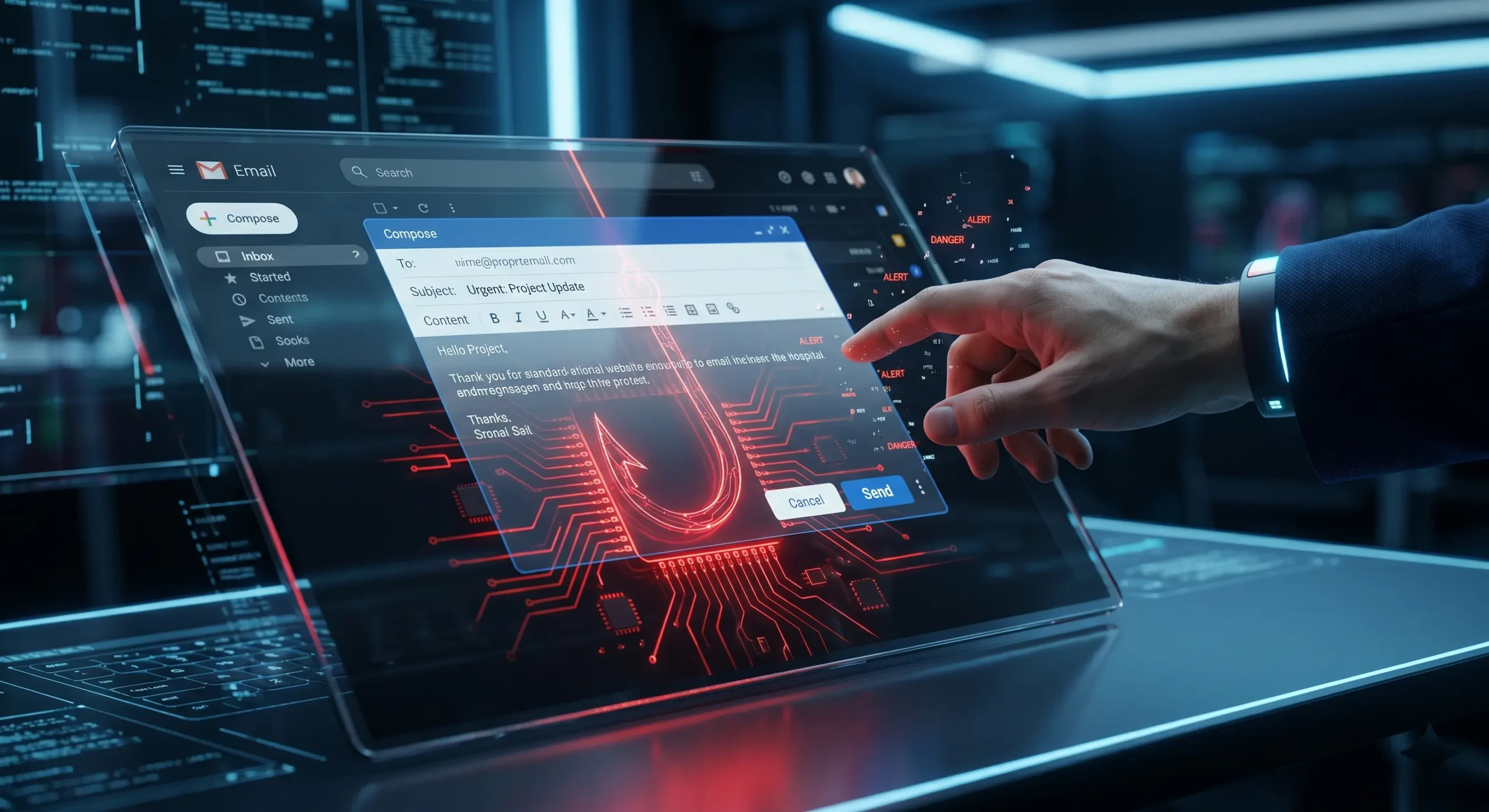
Forget emails full of grammar mistakes or unrealistic promises of fabulous inheritances. In 2026, phishing has become an art of precision. At Altanet Craiova we have noticed that the new attacks are so well crafted that even advanced users can fall into the trap. Artificial intelligence has removed the barriers of language and style, turning fake emails into perfect replicas of official communication.
According to the Infosecurity Magazine report, the use of AI in phishing campaigns has raised their success rate by more than 40%. Hackers no longer send messages at random; they use algorithms that perfectly imitate the tone and vocabulary of your business partners.
Why do the old detection methods no longer work?
In the past, we were taught to look for spelling mistakes or suspicious email addresses. In 2026, generative AI writes flawless text in any language. What is more, attackers use public data collection techniques to include specific details about your latest projects or meetings, making the message look extremely legitimate.
Imagine receiving an email from a supplier you have worked with for years. The message mentions the correct number of your latest invoice and tells you, in professional language, that the bank details have changed for future payments. With no spelling mistakes and a perfect logo, this email is almost impossible to tell apart from a real one without advanced verification tools.
The subtle signs of AI-powered phishing
Although they are much harder to spot, there are a few clues you should watch for in 2026:
- Disguised urgency pressure: The messages are subtle, but they create a sense of urgency that pushes you to skip the standard verification procedures.
- Short links and redirects: Attackers use domains that look strikingly similar to the real ones (e.g. altanet-suport.ro instead of altanet.ro).
- Requests to change sensitive data: Any request to change bank accounts or passwords by email should be treated as suspicious by default.
- ClickFix and automatic execution: New techniques that trick you into "fixing" a document display error, while actually installing malware in the background.
How do you protect yourself when the email looks perfect?
To stay safe, Altanet Craiova recommends moving from simple observation to technical verification:
- Verification through a second channel: If you receive a financial request, confirm it by phone using a number you already have saved, not the one in the email.
- Multi-Factor Authentication (MFA): Even if hackers learn your password through phishing, they will not be able to get into the account without the code from your phone.
- AI-based filtering solutions: Use security systems that analyse the email metadata, not just the text, to detect the real origin.
- A culture of reporting: Encourage employees to report any strange email, without fear of being criticized.
Conclusion
Phishing in 2026 no longer targets only uninformed users, but anyone who is in a hurry or inattentive. When technology can imitate reality perfectly, our only weapon remains vigilance and rigorous checking of procedures. Do not let an "impeccable" email compromise your entire business.
Have you recently tested your team against the new phishing methods? Altanet Craiova offers controlled attack simulations and next-generation email protection solutions. Get in touch with us on the contact page to secure your communication.
This article is part of the Altanet series on cyber threats in 2026. Next article: Digital identity: The new frontier of cyber warfare. See also the complete guide to the series.