
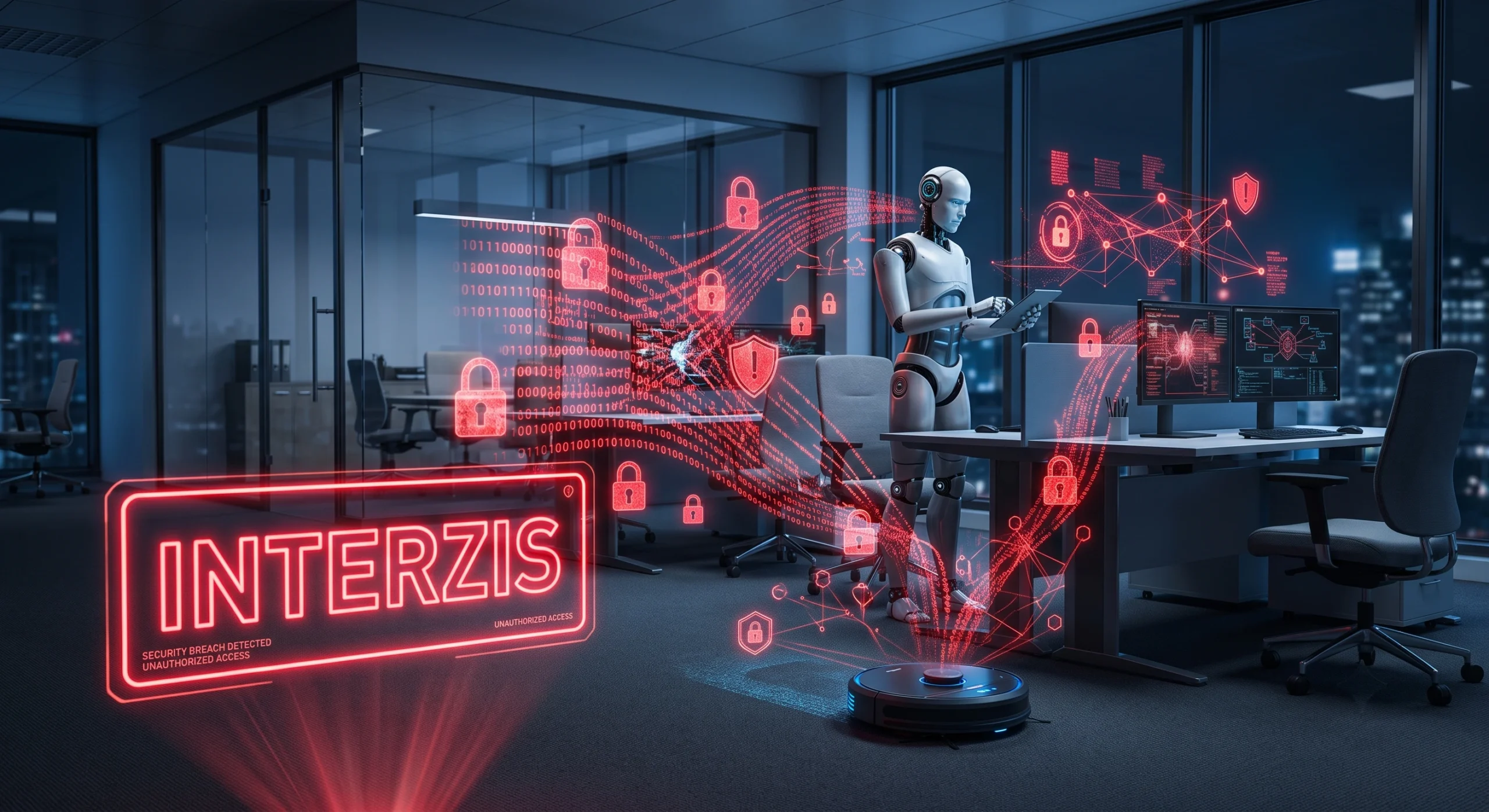
The United States banned the import of advanced robots manufactured abroad at the end of July 2026. The measure is aimed primarily at China, the world leader in the field. The Federal Communications Commission then clarified the details of this major decision. The ban covers the latest-generation humanoid robots and new models of robot vacuum cleaners. These are not yet sold regularly on the American market. The reason given by the authorities is the strict defence of national security. There is a major risk that foreign actors could gain access to devices and sensitive data. The decision sends an important lesson to any company in Romania. Smart devices connected to the internet are treated as a serious security problem. This deserves the full attention of entrepreneurs who have smart equipment in the office.
What happened, in brief
The American government blocked the import of advanced robotic devices produced outside the country. China accused Washington of protectionism and announced countermeasures. The FCC then explicitly extended the ban to robot vacuum cleaners and new devices. The authorities argue that these can become network access points. They allow the collection of maps, audio-video recordings and unencrypted network traffic. The measure does not affect devices already sold in the US in any way. It targets only new models that were about to enter the market. This is one of the broadest restrictions applied to consumer electronics so far.
Why robots in particular, and the numbers behind it
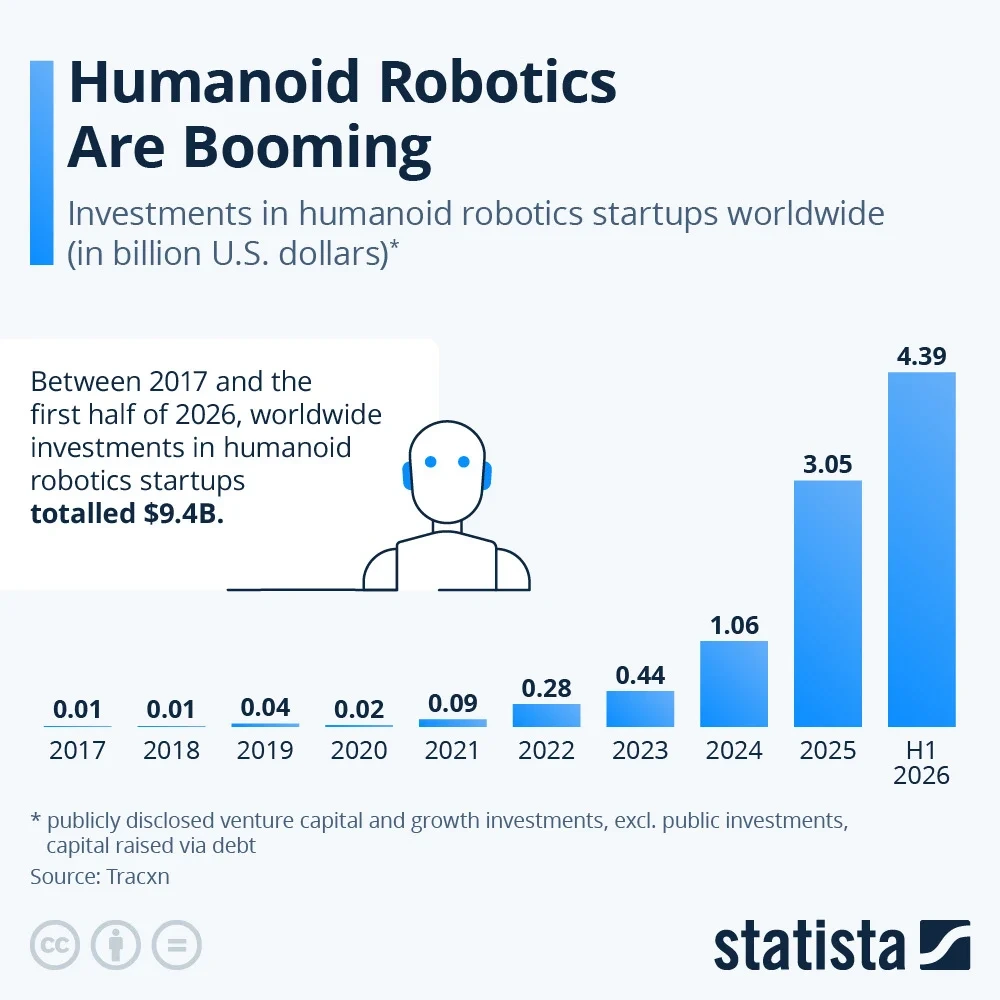
The timing of this government ban is no coincidence. Humanoid robots are currently going through an entirely unprecedented investment boom. According to Tracxn data published by Statista in 2026, the figures are truly impressive. In the first half of the year alone, 4.39 billion dollars were invested worldwide. The sum exceeds all investment in the entire previous decade combined. For a simple comparison, in 2024 investment totalled only 1.06 billion dollars.
The ranking by country explains very clearly the nervousness of officials in Washington. Cumulative investment in humanoid robot startups shows an Asian dominance that is hard to ignore.
| Country | Investment (million USD) |
|---|---|
| China | 4,440 |
| USA | 3,020 |
| Canada | 109 |
| Japan | 69 |
| Israel | 17 |
| United Kingdom | 13 |
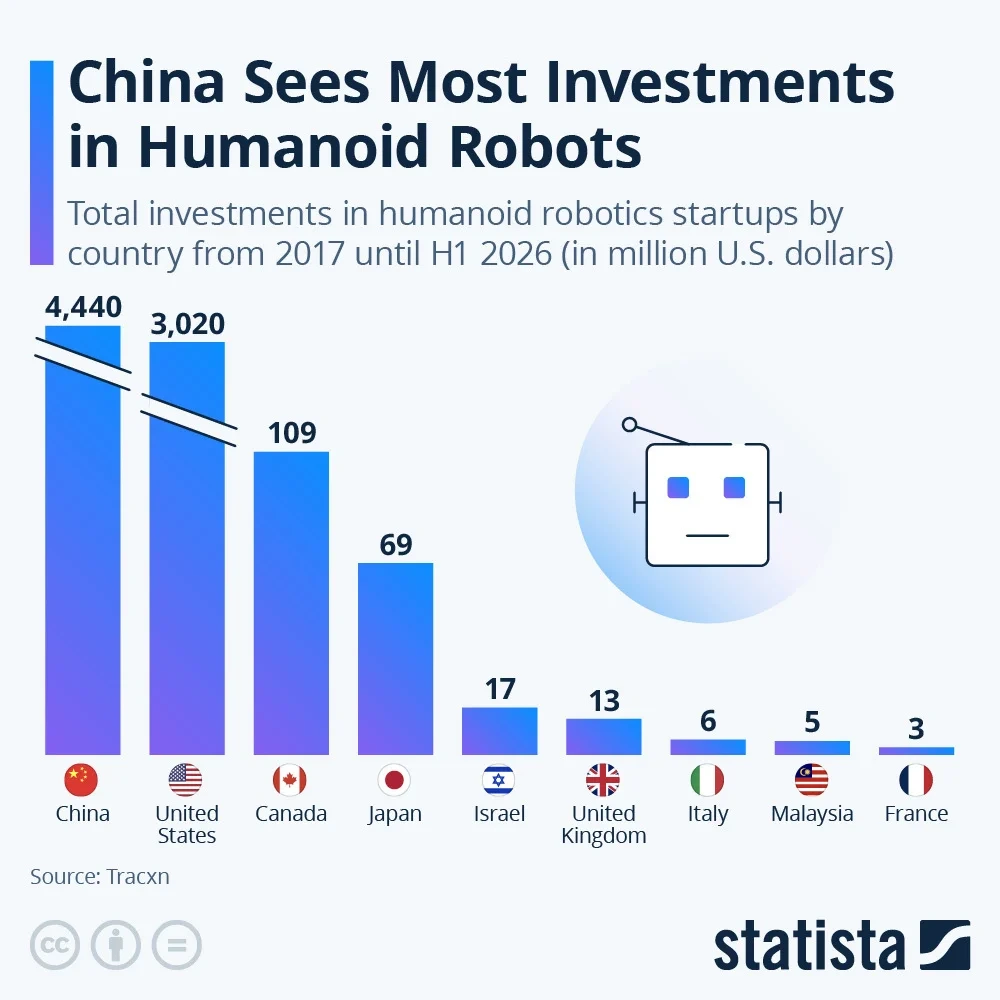
China leads this industry globally by a wide margin and attracts the most funding. The distance to the rest of the developed world is huge and worrying for competitors. The humanoid robot race has effectively become a dangerous arena of two-way economic confrontation.
The robot vacuum seen as a spy in the living room
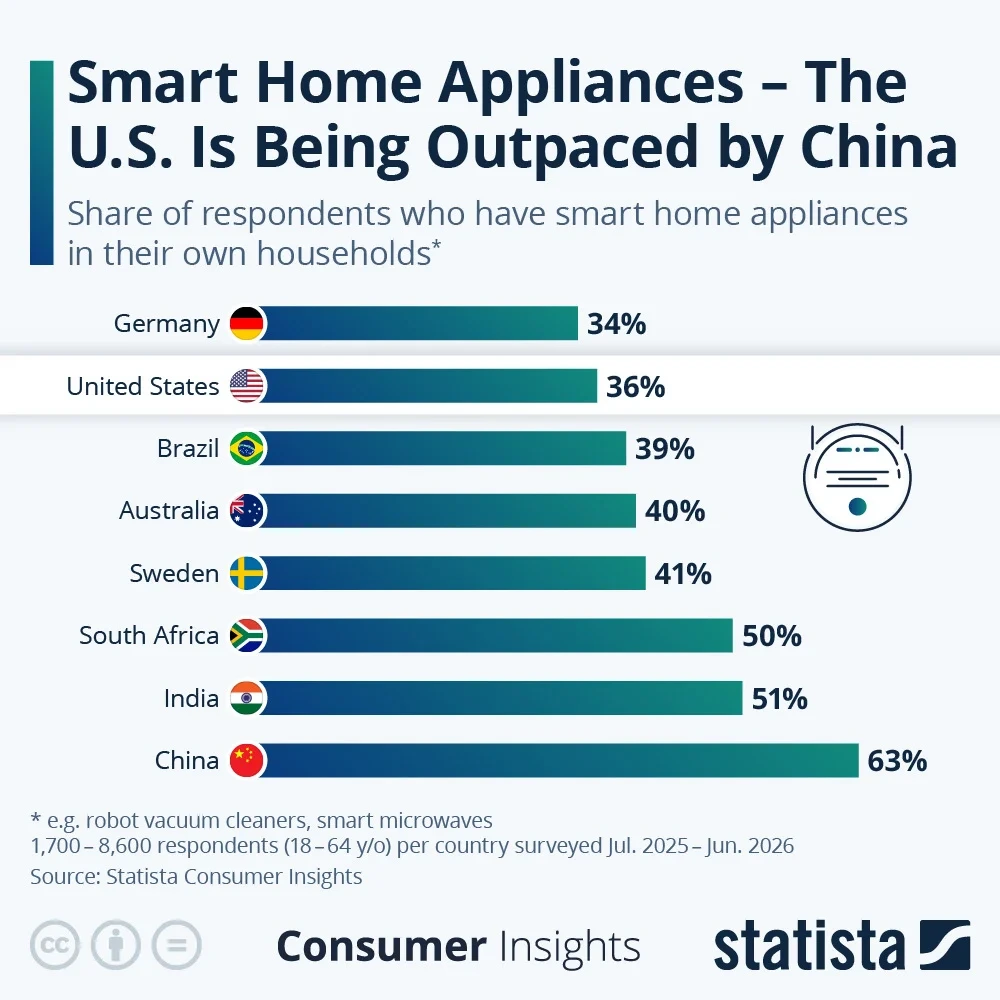
The inclusion of robot vacuum cleaners in the decision surprised the general public and raised many questions. From a cybersecurity perspective, the device is a complex computer on wheels. It has cameras and LiDAR sensors that map all rooms in detail. New models include powerful microphones and a permanent connection to the company's Wi-Fi network. They communicate constantly with the foreign manufacturer's servers for various updates. This is the exact profile of a risky IoT device in any modern infrastructure. An attacker can very easily use it as an entry point into the network. Consumer appetite for such household appliances is visibly growing every year. Around 63% of Chinese consumers already have smart appliances at home. The US records a share of 36%, while Germany stands at 34%.
Europe is the discreet supplier of the robotics revolution
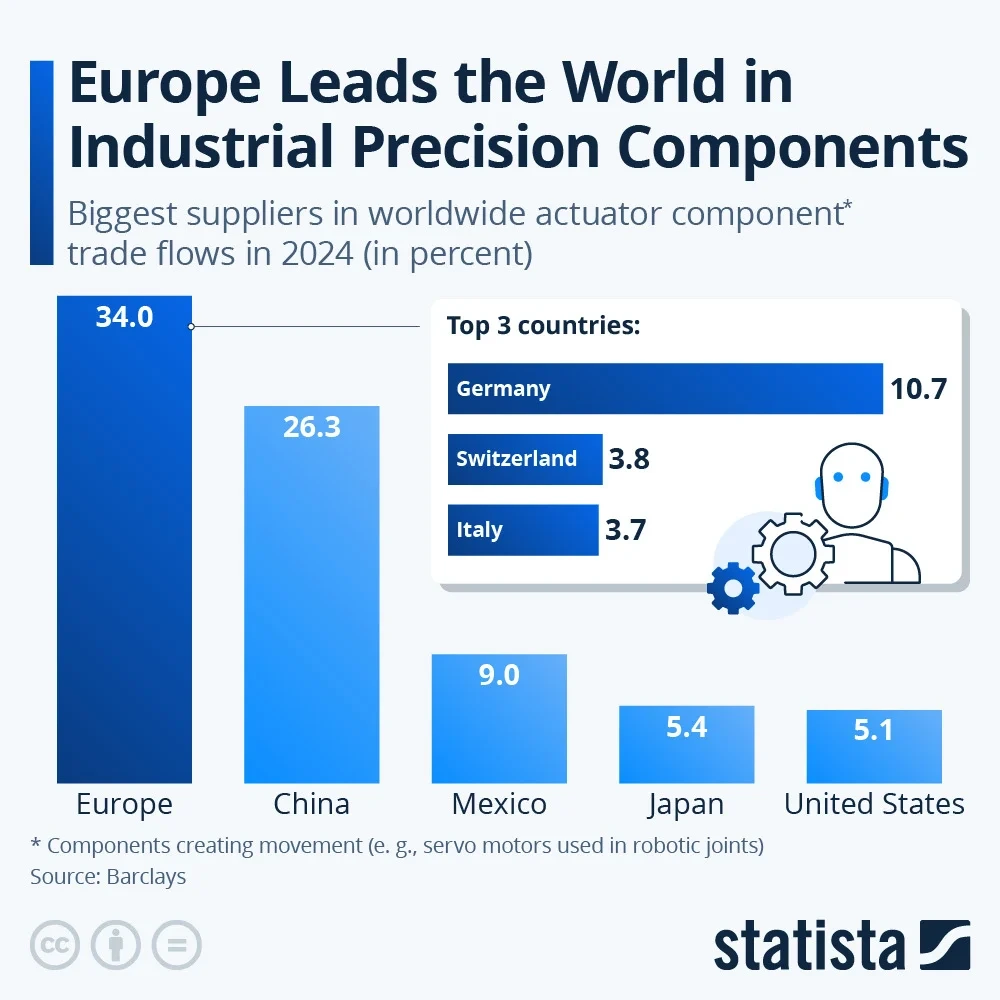
A detail less visible in the media is the very strong position of our continent. Europe dominates world trade in precision components for industrial and household robots. Barclays financial data for 2024 indicates a very clear European lead. Around 34% of actuator trade flows come directly from Europe. Actuators are the vital mechanical components that produce the smooth movement of robotic joints. China exports 26.3%, Mexico has 9%, and the US holds only 5.1%. Germany alone covers 10.7% of the total supplied globally in this sector. The know-how accumulated in the European car industry proves to be a truly strategic asset. The robotics market represents an immense financial opportunity, not just a geopolitical dispute.
What this means for your company in Romania
Romania has not banned the local sale of robot vacuum cleaners so far. Still, the reasoning of the American regulators remains perfectly valid in any office. Every device connected to the internet is a potential access door for hackers. IP surveillance cameras, smart sensors and network printers remain very vulnerable. They collect and transmit huge amounts of data to external servers, often unsecured. To ensure effective protection, you can immediately apply a few concrete steps:
- Take an inventory of the connected devices in your company so you know exactly what you need to protect.
- Separate the IoT network from the main work network through a dedicated, secured VLAN.
- Always change the default factory passwords and enable security updates manually.
- Check where the data ends up by reading the manufacturer's official policy very carefully.
- Set a procurement policy focused strictly on manufacturers that are safe and verifiable over time.
These preventive measures do not offer absolutely total protection against cybercriminals. They do, however, massively reduce the risk of an ordinary gadget becoming a weak link in the network.
Frequently asked questions
Why did the US ban the import of foreign robots
The American authorities cite serious and justified current national security concerns. Smart devices manufactured abroad can provide access to very sensitive data. The July 2026 measure mainly targets new models imported onto the American market.
Are robot vacuum cleaners dangerous for data security
A modern smart vacuum maps the surrounding physical space in great detail. It communicates over the company's Wi-Fi network and collects truly sensitive data. Unique passwords and timely updates, however, considerably reduce the possible IT risks.
Does the ban apply in Romania or the European Union
No, this ban remains for now a purely American state decision. In the European Union no similar restriction has been implemented so far. European data protection regulations do, however, aim at exactly the same technological accountability.
Who leads the humanoid robot race
China dominates this global market by a wide margin with investments of 4.44 billion dollars. The US quickly takes second place with about 3 billion dollars invested by companies. Europe, in turn, supplies the most high-precision mechanical components.
Conclusion
The American ban on humanoid robots is a major wake-up call for everyone. Any object connected to the internet deserves to be treated with maximum technical care from day one. Our professional team can help you at any time with a complete and precise IT audit for companies. We quickly provide practical cybersecurity solutions for the business you run successfully. Turn with confidence to our IT maintenance and troubleshooting services in any situation. Contact us for a careful assessment of your technology infrastructure today.