
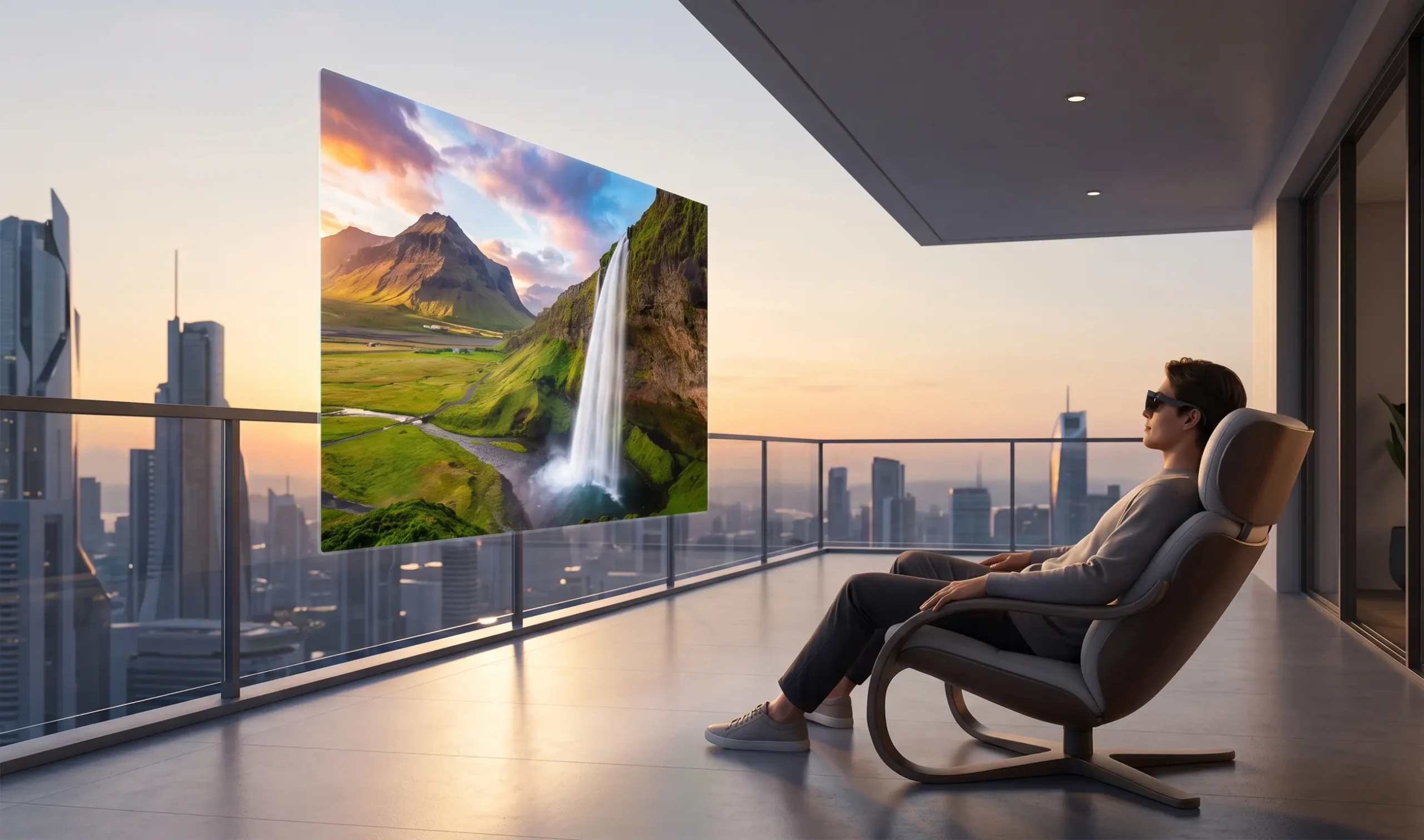
In 2026, the way we consume video content has changed radically. We are no longer tied to the massive screens of televisions or the fixed monitors on the desk. The company Xreal has launched a product that erases the border between reality and the digital world: Xreal 1S. These are the first augmented reality glasses to integrate an HDR10 display, delivering a visual experience that seemed impossible in such a small format. At Altanet Craiova we analysed how these glasses manage to replace an entire home cinema system while keeping the discretion of a pair of elegant sunglasses. Innovation is no longer just about what we see, but about how easily we can carry technology with us everywhere.
Xreal 1S represents the peak of portable display technology. Until now, AR glasses offered washed-out images or poor contrast, but the integration of the HDR10 standard changes everything. Colours are vibrant, and details in dark areas are as clear as on a premium TV. In 2026, mobility has become the number one priority for users. Whether you are on a plane, on a train or simply relaxing on the couch, Xreal 1S gives you a huge virtual screen of over 200 inches that follows you wherever you turn your gaze. It is a simple and friendly solution for anyone who wants quality entertainment without technical complications.
1. Micro-OLED Technology and the Magic of HDR10
The stunning performance of the Xreal 1S is based on the new Micro-OLED panels developed in partnership with Sony. These tiny screens, the size of a fingernail, have such a high pixel density that the human eye cannot distinguish individual dots. The result is a crystal-clear image that rivals the best screens on the market. HDR10 (High Dynamic Range) certification ensures stunning contrast, allowing you to watch films from platforms such as Netflix or Disney+ in true cinematic quality.
Another important technical aspect mentioned by The Verge is the peak brightness of 1000 nits. This means you can use the glasses even in strong ambient light without the image becoming washed out. Xreal 1S uses an improved optical system that reduces eye strain, allowing long viewing sessions. In 2026, technology has reached the point where visual comfort is no longer sacrificed for portability. The glasses automatically adapt to the content being played, always providing the best colour and contrast settings for a fully immersive experience.
| Specification | Xreal Air 2 (Previous Gen) | Xreal 1S (2026) |
|---|---|---|
| Dynamic Range Support | Standard SDR | Built-in HDR10 |
| Peak Brightness | 500 nits | 1000 nits |
| Refresh Rate | 90 Hz | 120 Hz Pro |
2. Ultra-Light Design and Ergonomics for Everyday Use
One of the biggest obstacles for wearable gadgets has been their weight. Xreal 1S breaks this pattern, weighing only 75 grams. They feel almost like a normal pair of glasses and are comfortable even after several hours of continuous wear. The design has been refined to distribute weight evenly across the nose bridge and behind the ears. In 2026, aesthetics are as important as technology, and Xreal 1S looks modern and minimalist. According to Wired, this is the product that makes AR technology socially acceptable in public spaces.
The temples of the glasses are flexible and include high-fidelity spatial speakers. The sound is directed towards your ears, so the people around you are not disturbed by what you are listening to. This "open-ear" solution lets you stay connected to your surroundings while enjoying your favourite content. Xreal 1S also includes a diopter adjustment system, making it accessible to those who wear prescription glasses. The simplicity of integrating these features into such a thin frame is proof of the engineering genius of the Xreal team in 2026.
3. Spatial Computing: More Than Entertainment
Although they are ideal for films, Xreal 1S is also a powerful productivity tool. By connecting to a compatible device, such as an iPhone or a laptop running Windows, you can have several virtual monitors in front of your eyes. You can work on an Excel spreadsheet, have a browser open and follow a video conference on Zoom, all at the same time. The concept of "spatial computing" became reality in 2026, and Xreal 1S is the most accessible gateway to this universe. You no longer need a huge desk to be efficient.
At Altanet Craiova we believe this gadget will change the way digital nomads work. You can turn any cafe table into a secure multi-monitor office, because nobody else can see what your glasses display. Data privacy is thus protected in a natural way. Xreal 1S is also compatible with the new portable gaming consoles, offering an immersive experience that no console screen can match. It is a universal device that adapts to your needs, whether you want to work or relax.
Conclusion: Classic Screens Are Becoming History
Xreal 1S is not just an improvement on a pair of glasses, but a sign that physical screens are starting to lose their dominance. In 2026, HDR10 quality can be carried in your pocket and activated in seconds. Xreal has managed to create a product that combines stunning visual performance with a friendly, easy-to-use design. The future is about freedom and spectacular images that no longer depend on where you are. Xreal 1S is clear proof that true innovation makes our lives simpler and more colourful, turning any moment into an unforgettable visual experience.
This article is part of the Altanet series on the best gadgets in 2026. See the complete guide to the series to recap all of the year's innovations. Next article: Clicks Keyboard Phone: Why the Physical Keyboard Is the New Symbol of Disconnecting.