
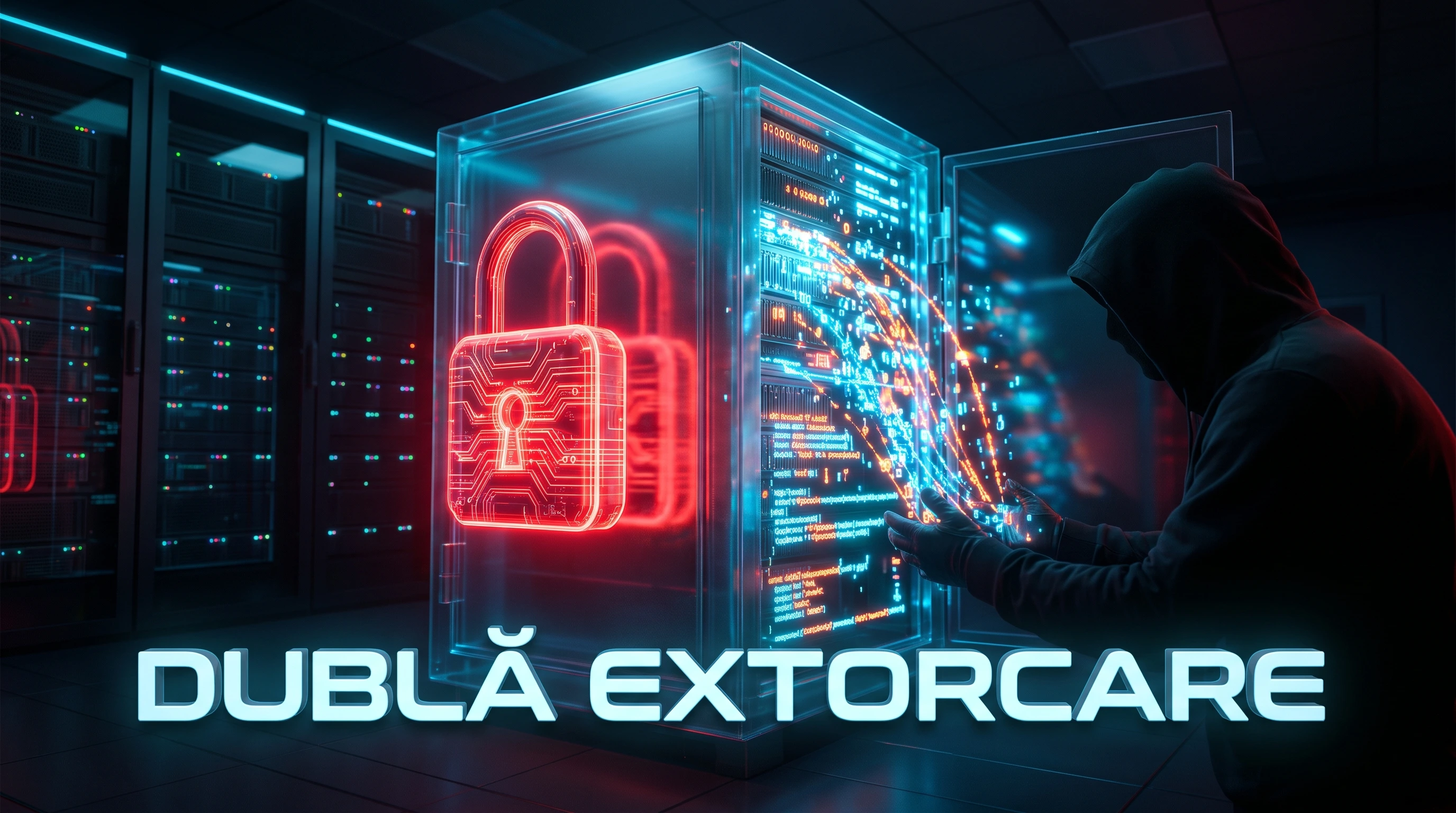
A double extortion ransomware attack is extremely serious. Criminals first copy the organization's data before encrypting it. Then, they demand money twice. First for the decryption key, and second to not publish what they stole. The backup strictly solves the first problem.
The second problem remains intact, no matter how good the backups are. From a cybersecurity auditor's perspective, this double extortion ransomware trend makes many defense plans written five years ago completely incomplete and outdated.
What has changed compared to classic attacks?
In the old form, files suddenly became unreadable. Only a ransom note appeared on the screen. Organizations with a working backup simply restored their systems and moved on.
The new tactic of cybercriminals
Attackers quickly noticed that more and more victims were completely refusing to pay. Therefore, they added a vital stage. This is called exfiltration: copying data out of the network well before encryption. This makes double extortion ransomware threats far more complex.
Data confirming the global trend
According to the Statista study, approximately 1,500 attacks resulting in data exposure were recorded in 2020. In 2021, there were approximately 2,700 cases. We are talking about an enormous increase of over 80% in a single year. This marks exactly the moment when publishing data became a standard practice.
Another very important benchmark is the year 2023. In the incidents carefully analyzed by the Sophos X-Ops team, classic formats represented 70.13% of all cases. Interestingly, data extortion without encryption already represented 7.14%. There are already new attacks where nobody encrypts absolutely anything, they just steal and blackmail.
How does a double extortion ransomware attack unfold?
Below are the stages as perceived by an ordinary company. This is a simple map of signs, not a complicated technical manual.
The main infiltration stages
- System entry
An email or remote access account without MFA enabled is often used. Other variants are a reused password or an outdated service exposed to the internet. It is rarely a spectacular attack. - Consolidation of position
The attacker creates additional accounts and searches for administrator accounts. He learns the whole network. This can take weeks. Good monitoring would immediately spot logins at unusual hours and massive accesses.
Data theft and blackmail
- Data exfiltration
Truly valuable data (contracts, customer databases, personnel files) are archived. Then they are transferred out of the organization. To a firewall without alerts, everything looks like simple higher outbound traffic. - Encryption and the note
Only now does the victim find out the truth. The longer the previous stages were, the more details the note contains about what the hackers stole. - Constant pressure
If the amount is not paid, the publication of samples follows. Then entire archives appear. Sometimes, the victim's clients are contacted directly by the attackers.
What does an incident look like from inside the company?
Here is a real, but completely anonymized case. A distribution company with 60 employees restores everything from backup in just three days. It considers the incident totally closed. However, after two weeks, a client receives an unexpected email. It contains his own contract attached and a clear question if he knows his data is circulating freely.
The difference between availability and confidentiality
The company had absolutely not notified the data protection authority. Their excuse was: "we restored everything". Here you see the major difference between an availability incident and a confidentiality one. The second one does not automatically end when the systems restart.
Public incidents in Romania in 2026 perfectly illustrate the first face. At ANCPI, the attack led to the deletion of approximately 1,000 virtual servers. At ANP, the July 29 attack led to the isolation of equipment. The question "what data was copied beforehand" is always the hardest.
Warning signs you can easily recognize
There are always a few clear clues announcing an imminent disaster in the network. Pay attention to these details to prevent double extortion ransomware.
- Successful logins from locations or at times unrelated to the company's schedule.
- New administrator accounts that absolutely no one remembers creating.
- Unusual outbound traffic, especially at night or during the weekend.
- The antivirus suddenly deactivates "by itself" on one or more systems.
- Backup processes start failing totally for no reason a few days before the attack.
Effective controls and the blocked stage
| Proposed Measure | Blocked Stage | Effort Level |
|---|---|---|
| MFA on email, VPN, and accounts | Entry | Low |
| Least privilege and account review | Consolidation | Medium |
| Monitoring data access | Exfiltration | Medium–High |
| Internal network segmentation | Propagation | Medium |
| Isolated and tested backup | Encryption | Low–Medium |
| Rapid response procedure | Pressure | Low |
What you can do this very week
Carefully verify if MFA authentication is active on all email accounts. Immediately request the list of accounts with administrator rights and ask why they have those special rights. Clearly confirm that the company's backup cannot be deleted with the passwords that manage the servers.
An essential first step for protection
Establish in writing who makes the legal decision to notify in case of an incident and who calls whom. In conclusion, double extortion ransomware has shifted the center of gravity. We no longer ask "can we restore?", but "can we see and stop the copying of data?". If you don't know who has access to data, a brief network evaluation is the first smart step.
Call experts anytime for total security
We can always bring a simple solution to keep the whole system in a safe place. Therefore, contact our experts by visiting the contact form on the site and receive the appropriate IT support. We always help your businesses by conducting a complete IT audit for companies and we find vulnerabilities. In addition, we bring cybersecurity solutions for your business meant to fully support office work.
Request a quote from Altanet
Leave us your details and a few words about your request; we will get back to you as soon as possible. For emergencies: 0351 444 444 / 0770 970 444.